Monday, June 30, 2008

Tunguska Remembered

100 years ago today a small asteroid or comet fragmented and exploded in the atmosphere above Siberia. Everything directly below the explosion was incinerated while trees were flattened for hundreds of square miles around the event.

This account is from the June 2008 issue of Scientific American:

June 30, 1908, 7:14 a.m., central Siberia—Semen Semenov, a local farmer, saw “the sky split in two. Fire appeared high and wide over the forest.... From ... where the fire was, came strong heat.... Then the sky shut closed, and a strong thump sounded, and I was thrown a few yards.... After that such noise came, as if . . . cannons were firing, the earth shook ...”
More information is at the link above and here from JPL.

An explosion like the one that occurred at Tunguska would be a disaster beyond all measure if it happened today over a large population center. Astronomers using telescopes at Palomar and elsewhere are working to discover new asteroids and uncover any threats that might be out there. Luckily there is no known asteroid headed for certain impact with Earth.

Sunday, June 29, 2008

Happy Birthday Dr. Hale


George Ellery Hale was born on 140 years ago today. We should all try to live by his motto:

Make no small plans. Dream no small dreams.

Thursday, June 26, 2008

New Instrument. New Planets?

Project 1640, a new instrument for the Hale Telescope has arrived. With this new instrument astronomers hope to actually photograph exoplanets--planets that orbit other stars.

The instrument was built by the American Museum of Natural History and the Institute of Astronomy at University of Cambridge. It has only just arrived at Palomar. Today's big event was to make sure that it would properly attach to the telescope and its adaptive optics system. Over the next week and a half the instrument will get fine tuned in preparation for first light.

The new instrument can be seen at left on its cart prior to its fitting test earlier today.

Once it is up and running it will use adaptive optics to correct for distortions in the atmosphere and then a coronagraph which will shield the bright light of a star allowing for the direct photography of an exoplanet. Lots more information is at the Project 1640 link above, but it is certainly worth the time to visit http://lyot.org/.

Stay tuned for updates after the instrument gets some telescope time.

Remembering a big day for Public Outreach

Yesterday, marked the three year anniversary of the 2005 Palomar Observatory Open House. By some estimates we gave tours of the 200-inch Hale Telescope to more than 4,000 people - all in one day. As you can see in the photo above (taken by Caltech's Robert J. Paz) the line to get in reached epic proportions. It was heart warming to see so many people show up to visit Palomar.

At the open house we kicked off our Friends of Palomar Observatory program where members now get inside tours, talks by astronomers and some evening viewing programs (sorry, not through the 200-inch telescope).

If you want a tour of the Hale but missed the Open House of '05 and are not a member of the Friends of Palomar Observatory - don't despair. We give tours for the general public on most Saturdays (May - October) at 11:30 a.m. & 1:30 p.m. For a small fee ($5 for adults) you can get an hour or more guided tour of the Big Eye. Space is limited and the tours almost always sell out. More information on the Public Tours is here.

Saturday, June 21, 2008

Light Pollution on the Radio

Light pollution was featured yesterday on National Public Radio's Marketplace Morning Report. You can listen and read the transcript here. An estimated $10 billion is annually wasted in illuminating the night sky. That's a tremendous amount of tax payers dollars down the drain and an enormous contribution to greenhouse gases. The problem is the easiest form of pollution to fix and the only one that I know of where you'll save money in the process.

Friday, June 20, 2008

A Cosmic Showing

If you are in Southern California sometime from June 21 - August 3 you should visit the "Capturing the Cosmos: a Personal Journey" exhibition of astrophotos. The images were all taken by my friend Dennis Mammana. If you aren't familiar with his work check out his website and the gallery of his images at The World at Night website.

I am sure you will agree that he has taken some amazing images. The showing will be in the OPT Underground gallery in Oceanside, CA. All of the images in the show will be available for purchase and a portion of the proceeds will go toward the Wounded Warrior Project.

Saturday, June 14, 2008

Plutoids

Have you heard the news? Pluto is the defining object for the other round ice balls of the outer solar system. The new IAU-approved term for such objects is Plutoid. Read all about Plutoids in this post from the Mike Brown's Planets blog.

Cool stuff.

Friday, June 13, 2008

More from the IDA Annual General Meeting

The second full day of the annual general meeting of the International Dark-Sky Association brought a wide-range of sessions. Paul Bogard previewed his anthology, Let There Be Night - Testimony on Behalf of the Dark, which is due out this fall. Of big news to some: the long-awaited Model Lighting Ordinance is finally expected to be out this July.

Perhaps the most interesting talk to me was by Dr. Rubin Naiman, a sleep specialist. According to him, light at night is the single most overlooked factor in sleep disorders and an astonishing 76% of American adults have at least 1 symptom of a sleep disorder. 40 millions American adults have insomnia. Lights at night are not the only factor here, but they certainly do not help people to have a good night sleep.

One of the cool things that conference attendees got was the Bulbrite Dark Sky fixture-within-a-fixture. It is a great way to retrofit a fixture without having to buy a new one. It is energy efficient and dark-sky friendly.
Finally, at the end of the IDA meeting it was time to bid farewell to Dr. David L. Crawford, founder and executive director of the IDA. Dave and his wife Mary have put their hearts and souls into the IDA for two decades. The legacy of their work will be with us for years to come. Now many of the rest of us know how to implement intelligent lighting that is good for human health, the environment, astronomy, and more.

Monday, June 9, 2008

The IDA Turns 20

This week the International Dark-Sky Association is holding its 20th annual meeting. Yup, the IDA has been fighting for your right to see the night sky since 1988.

Sunday featured board meetings, section meetings and an evening excursion to Kitt Peak National Observatory to join their Nightly Observing Program. It made for a long day, but everyone had a fantastic experience there. Palomar may have a similar program some day, more on what is developing soon.

Today's meeting featured a morning heavy on information on lighting technologies and LEDs. Did you know that 20% of global electricity consumption comes from outdoor lighting? Imagine the energy savings that could come from more efficient and intelligent use of outdoor lighting.

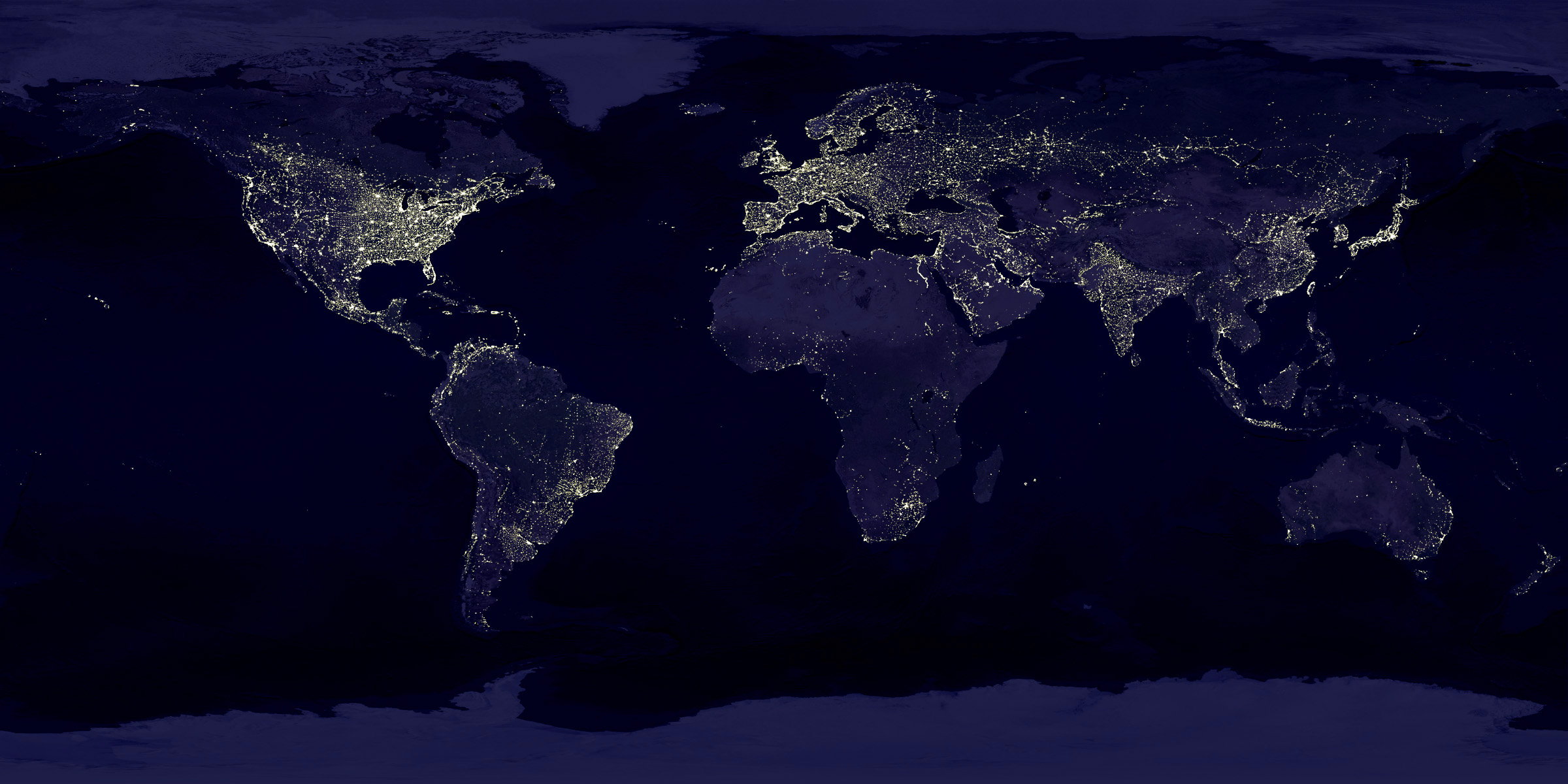
You've probably seen those USA or World at Night photos that come from the Defense Meterological Satellite Program. Chris Elvidge from NOAA spoke about NightSat, a proposed satellite that could study light pollution and have many more applications. On that site is an amazing video of images of city lights taken from the International Space Station. It is certainly worth a look.

The day ended with a short talk by author Timothy Ferris and a screening of his movie Seeing in the Dark. I think they are re-running this on PBS this week. Check your local listings. You'll be glad you did.

Are you a member of the IDA? You should be. Find out how to join and by just about all you will ever need to know about outdoor lighting at http://www.darksky.org/.

Quark Stars?

One story from the AAS meeting that I haven't had the time to post about concerns the announcement from some Canadian astronomers that a few recent, superluminous supernovae may have marked the creation of some quark stars.

Not everybody agrees with the idea, but it would certainly be interesting if true. What's the connection to Palomar? On of the supernovae was co-discovered with the 48-inch Samuel Oschin Telescope. Read all about it here.