Showing posts with label dwarf planet. Show all posts

Friday, December 3, 2010

Astrophoto Friday - Eris Discovery

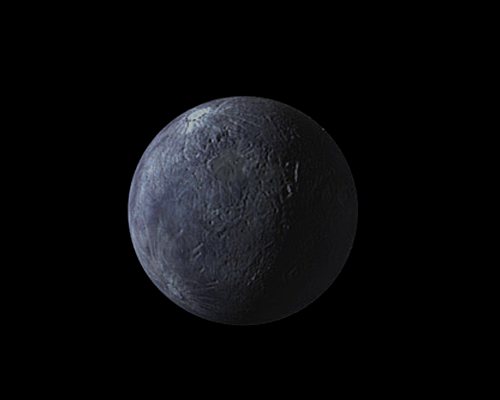
Astrophoto Friday returns today with an animated gif of the discovery photos of dwarf planet Eris. Can you spot it?

Eris is the moving object near the left-hand side of the image.

The discovery of Eris was made by Caltech's Mike Brown and his partners. They first imaged this distant world of the Kuiper Belt using Palomar's 48-inch Samuel Oschin Telescope. The discovery rocked the astronomical world and helped to bump Pluto out of its planetary status. Both Pluto, Eris and some other worlds discovered by Mike at Palomar share a new category, that of dwarf planet.

The discovery and the turmoil that followed is the subject of a new book by Mike Brown which will be available on Tuesday, December 7 (both Gerard Kuiper’s birthday and Pearl Harbor day).


Of course, Palomar Observatory's gift shop will be stocking the book - which happens to make a great gift.

Tuesday, May 4, 2010

Palomar Observatory on TV this week

Look for Caltech's Mike Brown and Palomar Observatory to be featured in this Thursday's episode of Known Universe on the National Geographic Channel. Check your local listings.

Check out the preview embedded below (and please accept our apologies for the commercial that runs first).


Filming at the Hale Telescope was done last summer. In the episode Mike Brown talks about dwarf planet Eris, a member of Kuiper Belt, discovered by him with images taken with Palomar's 48-inch Samuel Oschin Telescope.

Tuesday, April 14, 2009

Keeping Up With the Outer Solar System

In late March I mentioned that Caltech's Mike Brown was looking for a name for the satellite of Pluto. He's picked one so be sure to visit Mike Brown's Planets to find out what name was chosen and why.
Speaking of Mike Brown, he has been looking for more objects like Sedna but none have been found yet and that is telling about the solar system. He has also published some work on Haumea and its satellites.

Thursday, February 26, 2009

Podcast on Sky Surveys

My latest podcast for the 365 Days of Astronomy is up. You can check it out from their site directly or download it via iTunes too.

Error Correction: For some reason in the podcast I said the QUEST camera was 196-Megapixels. It was really only 161-Megapixels. Sorry about that.
Here are some links to go with the show:
Palomar's Samuel Oschin Telescope - Where it all happens

Second Palomar Observatory Sky Survey (aka POSS II) - some details on the second survey.

Google Sky & WorldWide Telescope - two ways to surf the sky from your desktop.

SkyFactory - home of some great images produced from the Second Palomar Sky Survey

High-Performance Wireless Research and Education Network
- The high-speed network that allows astronomers to work remotely, far from Palomar.

Palomar-QUEST Survey - info on the survey completed last fall

Dwarf Planet Eris - Mike Brown's page on the world that "killed" Pluto

Saturday, June 14, 2008

Plutoids

Have you heard the news? Pluto is the defining object for the other round ice balls of the outer solar system. The new IAU-approved term for such objects is Plutoid. Read all about Plutoids in this post from the Mike Brown's Planets blog.

Cool stuff.

Tuesday, January 1, 2008

A Look Back

2008 will mark the 60th anniversary of the dedication of the Hale Telescope (1948 - 2008). Over the course of the year I'll be presenting some historical highlights from the observatory's past.

January 1, 1801 —Long before the birth of the Palomar Observatory Ceres, the first asteroid, was discovered by Guiseppe Piazzi. For a time Ceres was thought to be a planet. With the discovery of other asteroids, and the asteroid belt, it was eventually realized that Ceres is better described as the largest member of the asteroid belt.

This same sort of sequence was repeated with Pluto. It was discovered in 1930 and classified as a planet. In the 1990s came the eventual discovery of the Kuiper Belt, a collection of icy bodies in the outer solar system. 2005 brought the discovery of distant Eris, a world larger than Pluto. Eris was discovered using the Palomar Observatory's Samuel Oschin Telescope. Its discovery called into question the planetary status of Pluto.

In 2006 Ceres, Pluto and Eris were re-classified and given a new status —dwarf planet. The International Astronomical Union (IAU) dropped down to just 8 planets.


Some people are still upset by the IAU's decision to demote Pluto. Others see it as just another step in our understanding of our back yard, the solar system.