Thursday, February 5, 2009

Mystery Man

Later this month will be the 60th anniversary of the death of Russell W. Porter.


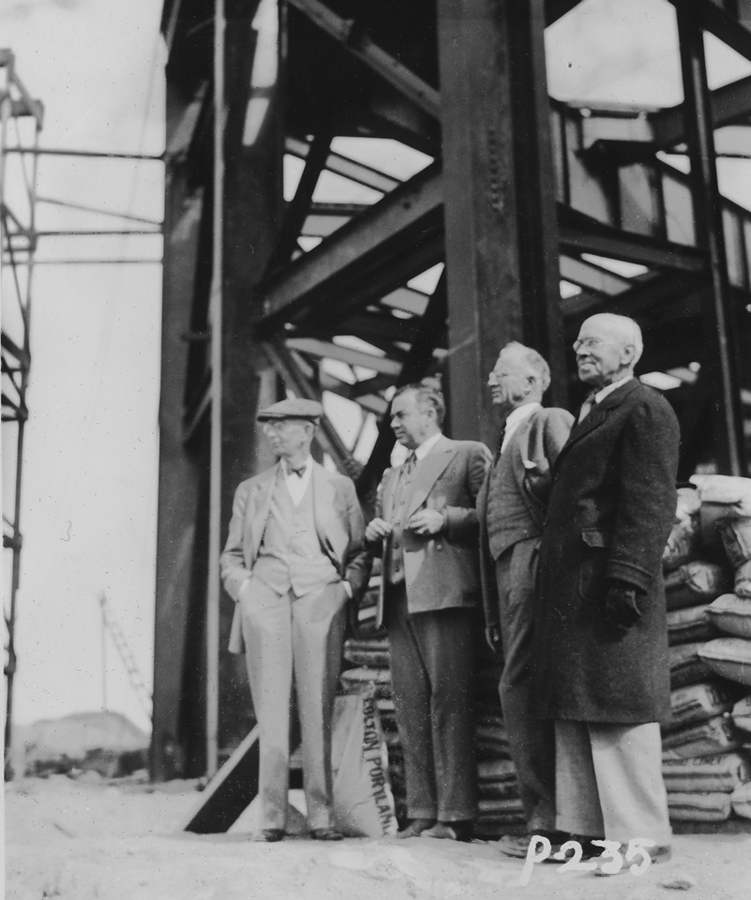
Here is Russell W. Porter (at right) during a visit to the construction site of the 200-inch telescope back in November, 1936.

Porter was a Renaissance man of immense talents. At Palomar he aided the design of the 200-inch telescope and its dome. He is perhaps best remembered for his detailed cut-away drawings of the telescope and its many parts. Most of these were done from blue prints long before the actual telescope was constructed.

One of his drawings shows a person in the prime focus cage, much like the photo of Edwin Hubble posted last week. Porter’s illustration was done nine years before Hubble’s first light trip.
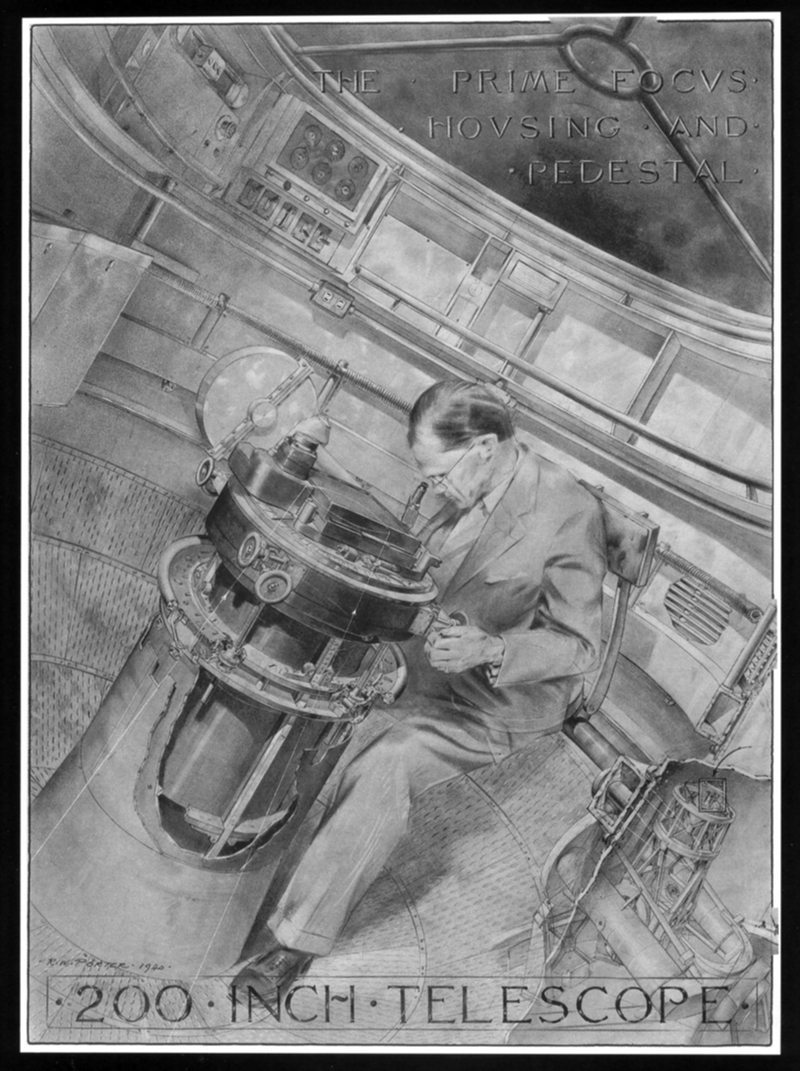
Who it was the Porter rendered in the drawing above has long been a mystery to me. The coat and tie is very Hubbelesque, but the likeness certainly isn't Edwin Hubble.

Porter had a history of putting relevant people into his drawings, so it was likely someone connected with the project in some way. He put Bernard Schmidt into his drawing of the 48-inch telescope at Palomar. Schmidt invented the type of telescope (also called a Schmidt Camera) that bears his name, but he never visited Palomar.

So who is sitting at prime focus in Porter's illustration? Last fall a clue came in the mail. A wonderful bundle of photos and documents that used to belong to James "Jimmie" Fassero, author of Photographic Giants of Palomar. In it is a letter written by Porter where he is discussing observing at prime focus and the drawing above.

"The 'poor devil' you refer to at the prime focus is Burton, who designed the p.f. [prime focus] pedestal It's a pretty good likeness of him. I got him to pose for me."

Porter's letter reveals that the mystery man is Burton and that Burton designed the prime focus pedestal. I still do not have a first name, but checking the blue prints reveals that drawings of many of the parts there were approved by "WDB". Perhaps Burton himself.

If anyone knows Burton's full name or any other information about him, please send it my way.

Finally we recently had another discovery about Burton and Porter. Some of our docents were looking at some old photos on lantern slides when they found a photo of Burton posing as Porter described and drew above.

Here is Porter's drawing and Burton. Side by side.

As always, click to enlarge. The likeness is great ("pretty good" in Porter's words), but I think that Porter may have given him a bit more hair than the photo shows.

Wednesday, February 4, 2009

Dark-Sky and High-Flying Podcasts

Be sure to check out the International Dark-Sky Association's February 2, 2009 podcast from the 365 Days of Astronomy. They have lots of great dark-sky resources available for the International Year of Astronomy.

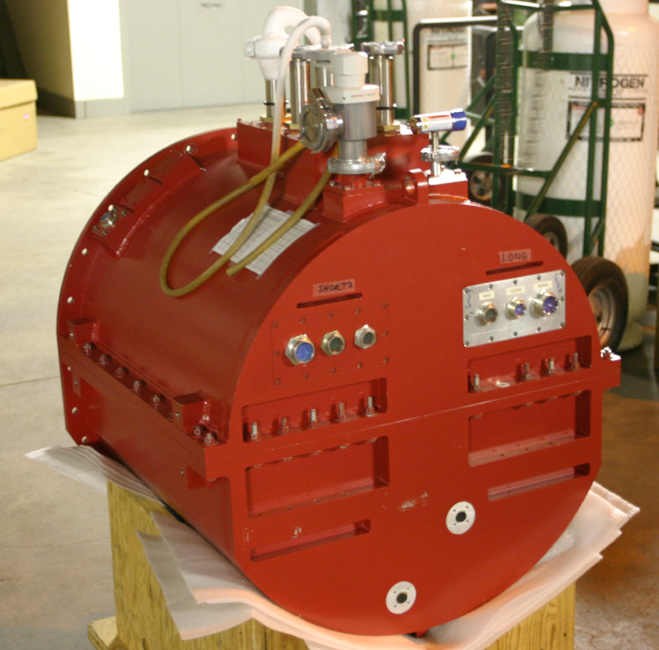
Speaking of podcasts . . . in another my friend Martin Ratcliffe discusses SOFIA, the Stratospheric Observatory for Infrared Astronomy. One of its instruments, FORCAST (Faint Object infraRed CAmera for the SOFIA Telescope), was first used on Hale Telescope back in 2006.

That's FORCAST below, before it was attached to the telescope's Cassegrain cage.


Saturday, January 31, 2009

First Light Follow Up

Long before the 200-inch telescope was completed, Collier's magazine paid Caltech for the exclusive rights to be the first to publish the pictures.

Edwin Hubble's first images (described in Monday's post) were published in the May 7, 1949 issue of Collier's and thankfully someone has scanned the article and placed it on the Web.


In addition to the astrophotos, there is an article written by David O. Woodbury, author of The Glass Giant of Palomar. The cover of the magazine was done by none other than the legendary space artist Chesley Bonestell. The original painting is now in the collection of the Adler Planetarium in Chicago. I hope to see the orginal painting in person one day.

Thursday, January 29, 2009

Almost like being there . . .

If you can't visit Palomar's big dome to see the 200-inch Hale Telescope in person you might be interested in seeing these amazing 360-degree photos created by jrbfoto.com. Be sure to give them time to load. Once they do then you can pan around, look up, look down, zoom in & out and have a grand ol' time.

The view from the observing floor
.

The view from the inside catwalk.

Update: Hey, this was my 200th blog post!

Monday, January 26, 2009

60 Years Ago Today - First Light for the Hale

60 years ago today Edwin Hubble took the first astrophotos from Palomar's 200-inch Hale Telescope. You can hear me talking about this anniversary in a podcast as a part the 365 Days of Astronomy podcasts.

Here are a couple of photos to go with the occasion.


The photo above comes from the LIFE photo archive hosted by Google. In the picture you can see Edwin Hubble inside the prime focus cage high above the 200-inch primary mirror. In those nights the astronomer had to ride inside the telescope to take images and spectra of the objects they wanted to study. Long nights and winter temperatures were known to take their their toll on astronomers who eventually took to wearing World War II surplus electrically-heated flight suits.

Technology eventually came to the rescue. Palomar's astronomers no longer use glass photographic plates, favoring CCD cameras which are more sensitive to light and can be controlled from a warm room.

Edwin Hubble first target on January 26, 1949 was none other than NGC 2261, also known as Hubble's Variable Nebula. Here it is:


On a side note, yesterday's Pasadena Star News had an article on Hale. Pasadena History: Bigger, the better for Hale.

Saturday, January 24, 2009

The Mysteries of the Cosmos


You can explore the Mysteries of the Cosmos by attending the event of the same name on the Caltech campus Friday, January 30 @ 7 pm. Details are at the link, but it looks like they have a great evening planned. Bad Astronomy blogger Phil Plait will moderate a star-studded panel that includes Caltech's Mike Brown, Debra Fischer of San Francisco State University, and Andrea Ghez of UCLA. They'll be discussing the outer solar system, life in the universe, black holes - basically all the cool stuff.

There will be a Q & A session and the whole thing will later be viewable on the web too. Sounds like a fun evening and a great way to continue the celebration of the International Year of Astronomy.

Palomar News Reels

Here's a vintage (possibly 1937) news reel about construction of the 200-inch telescope from HowStuffWorks. Sorry, but you'll have to endure a short ad first.

I know that there are more of these out there, so if anybody knows of any other such films feel free to drop me an email or leave a reply in the comments.

Monday, January 19, 2009

New Winter Visiting Hours

Starting today the Palomar Observatory will be closing an hour earlier for the rest of winter. Our new visiting hours:

From November through March: 9:00 a.m. - 3:00 p.m.

From April through October: 9:00 a.m. - 4:00 p.m.

Saturday, January 17, 2009

Palomar Goes Green

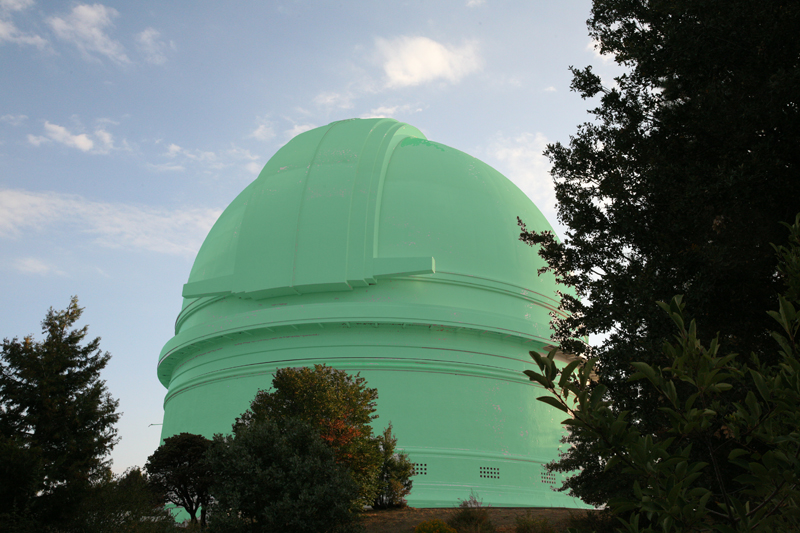
Palomar has gone green. Ok, the dome is still white (really, this is just a visual metaphor), but the observatory is working to cut its use of electricity. One of the ways that this is happening is through changes in the lighting behind the back-lit displays for visitors.

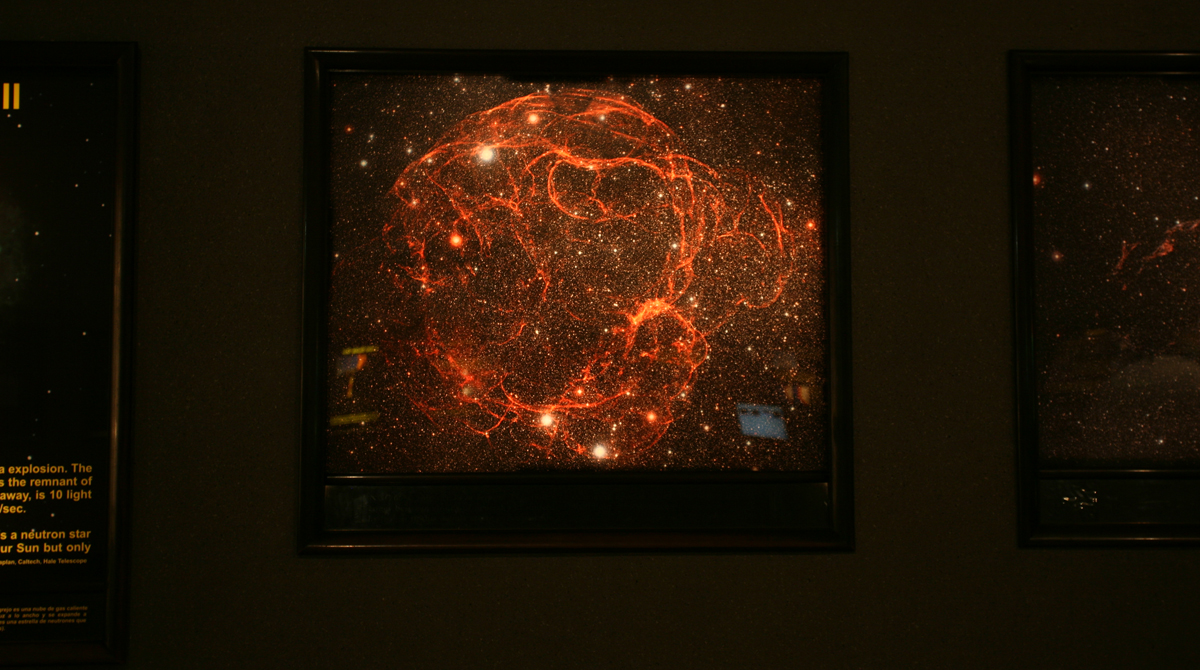
Here's one of the many displays in the observatory's visitor center:

It shows a supernova remnant known as Simeis 147. The image comes from the second Palomar Sky Survey and was nicely processed by Davide De Martin over at Sky Factory.org. (Visit his site there's lots of cool stuff there!)

The fixtures for the displays are more than 50 years old. Until recently each of the 30 displays had six 15-watt bulbs on the inside. On average they are turned on 8.5 hours a day. With the observatory being open to the public 363 days a year, the displays consume over 8.3 megawatt hours a year!

We’ve just made the switch to 15-watt compact fluorescent (CFL) bulbs. They are so much brighter than the old incandescent bulbs that we are able to drop each display down from six bulbs to two – cutting our energy use by 33.3%. That's a savings in money and a reduction in the amount of greenhouse gases that would otherwise be produced. So we get to show off cool photos of supernovae and telescopes but in a greener way.

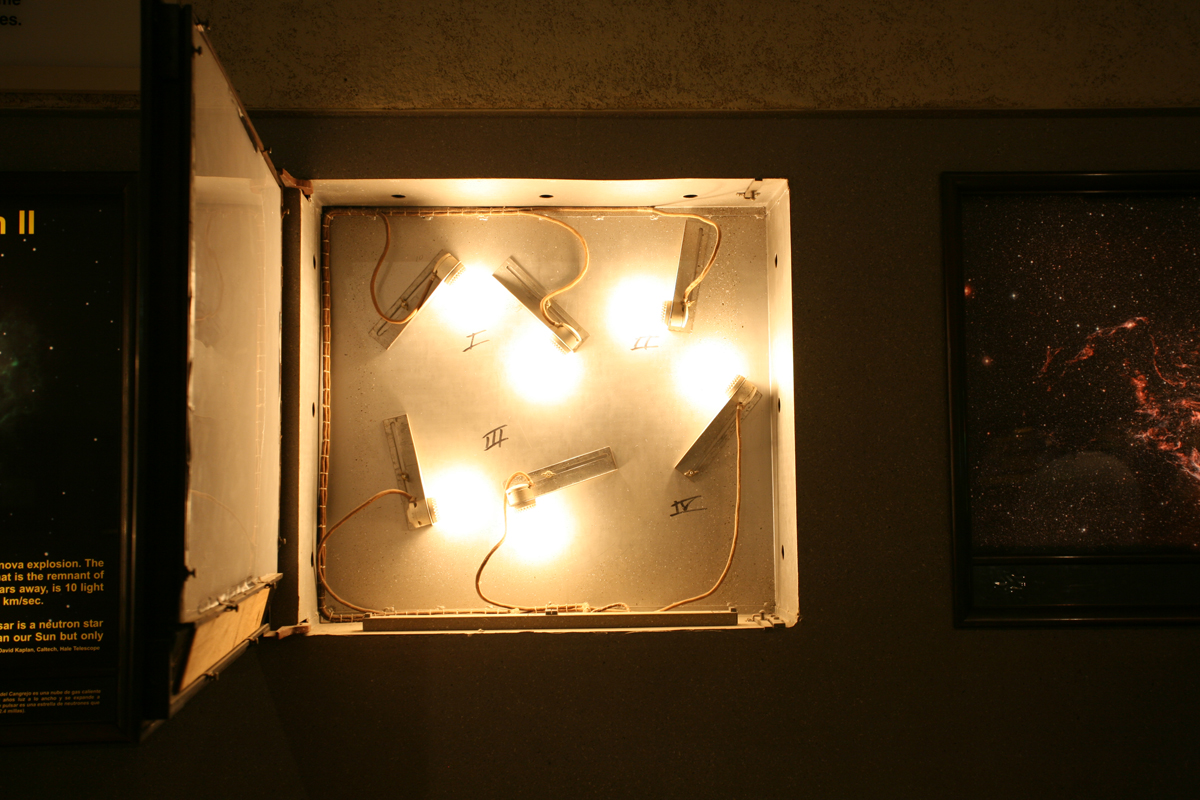
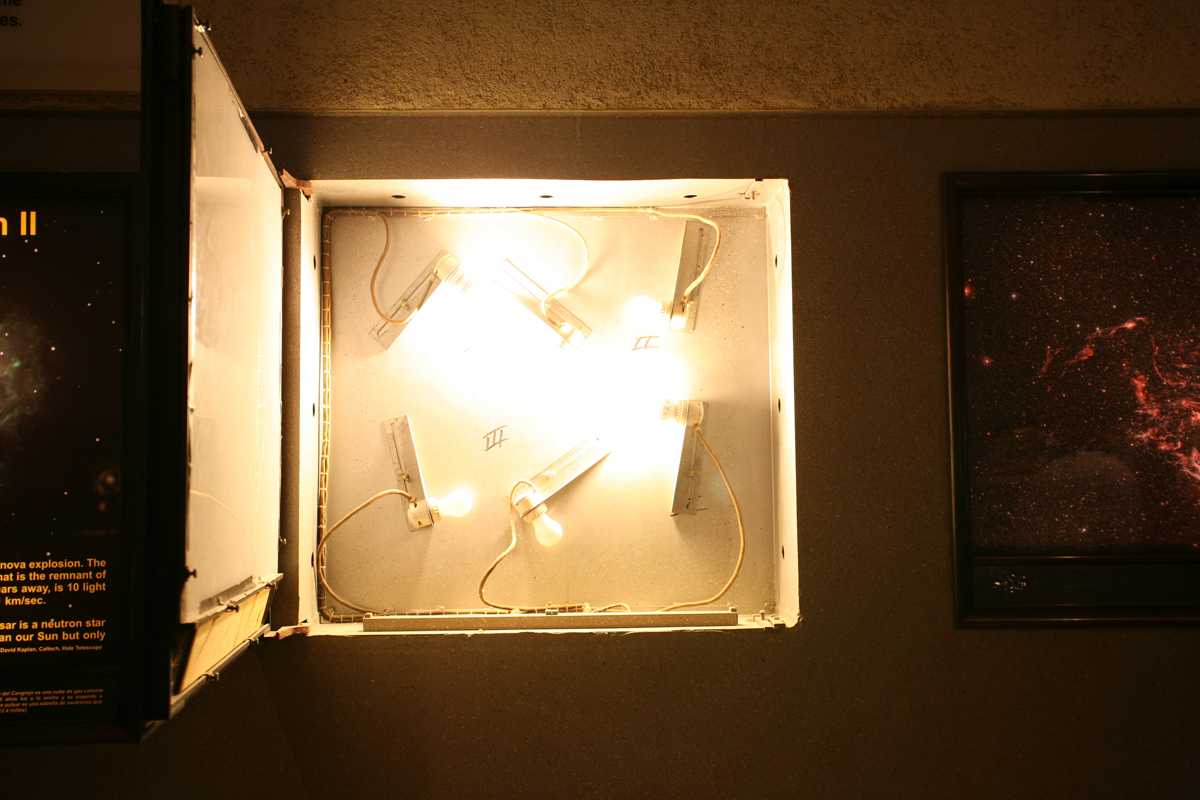
Here's the display from above opened up. Inside is six 15-watt incandescent bulbs:

Now replaced with just two 15-watt CFLs:

As you can see the CFLs are brighter. It may look like all six bulbs are on in this shot, but it is just 2 of the CFL's and 4 dead incandescents (to fill the otherwise empty sockets).

If you are making the switch at home remember that a 15-watt CFL is as bright as a 60-watt incandescent bulb. Be sure to use a lower wattage on those CFLs to prevent overlighting and any extra contributions to light pollution.

To reap even greater savings and cut on light pollution, remember to use the off switch.

Friday, January 16, 2009

January Laser

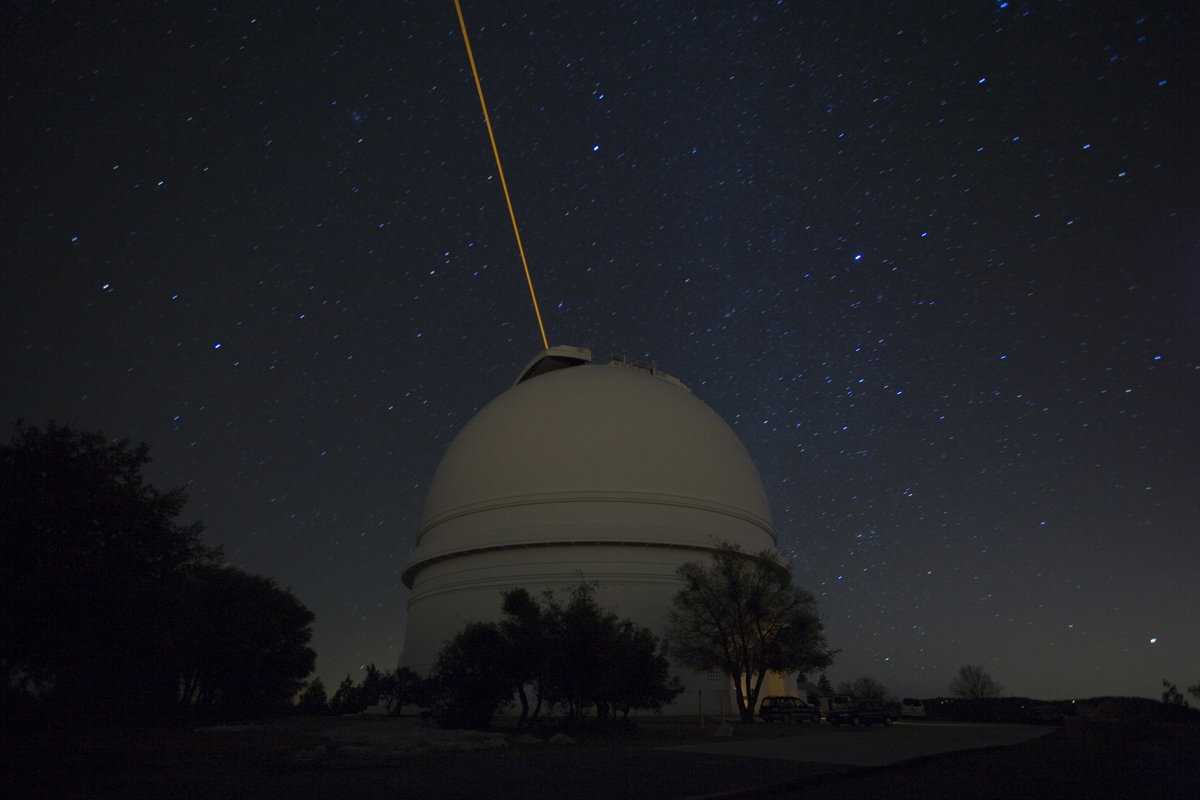
Last night: Clear skies. January stars. Hale Telescope. Adaptive optics. Laser guide-star.