Showing posts with label Light Pollution. Show all posts

Saturday, May 28, 2011

Milky Way Over Palomar

Astronomer Iair Arcavi comes to Palomar Observatory to use the Hale Telescope to study supernovae as part of the Palomar Transient Factory survey. The survey is going quite well with over 1,110 supernovae discovered so far.

Iair also manages to find the time to do some nighttime photography with his digital SLR camera. I have posted some of his work here before (See his shot of the Milky Way over the Hale Telescope, his 2 Nights at the Palomar Observatory video and his composite of the Perseid meteor shower).

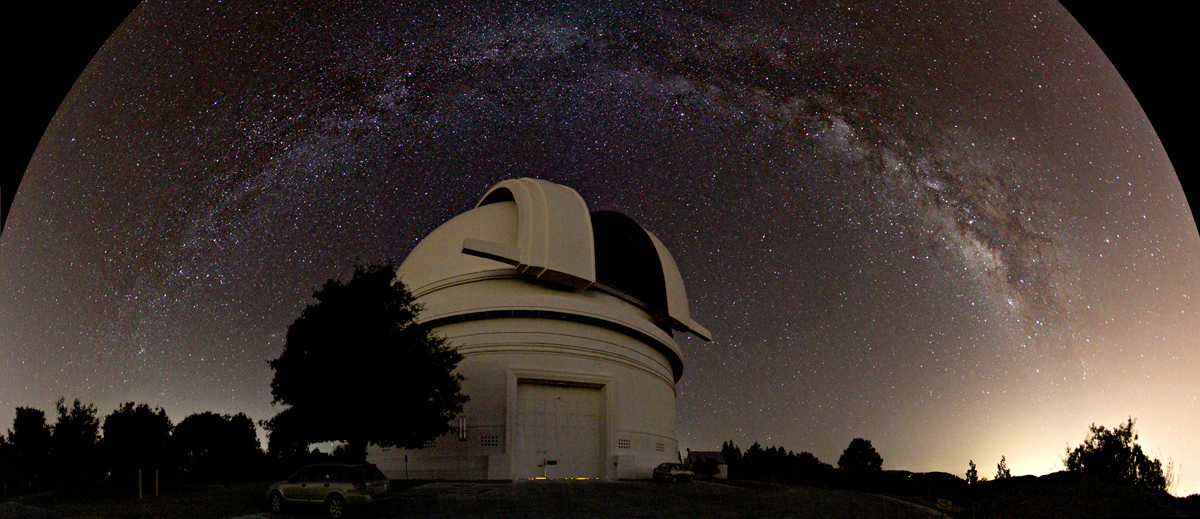
He managed to shoot some more dramatic images of our Palomar Skies just this last week. Both images nicely show off our domes, the heart of the Milky Way Galaxy and how light pollution is brightening our skies.
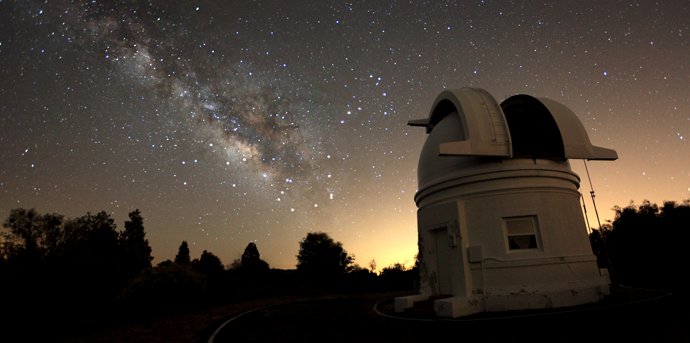
This image shows the dome that used to house the 18-inch Schmidt, Palomar's first telescope. The constellation of Scorpius can be seen just to the left of the dome. Note the bright sky glow to the southwest.

The 18-inch Schmidt is now retired but in its lifetime it was used for a tremendous amount of important work. For instance, just yesterday was the anniversary of that telescope being used to make the 1992 discovery of asteroid Braille (1992 KD). Astronomers Eleanor Helin and Kenneth Lawrence found the asteroid as a part of the Palomar Planet-Crossing Asteroid Survey. Just seven years later Braille was photographed as NASA's Deep Space 1 spacecraft flew past it.
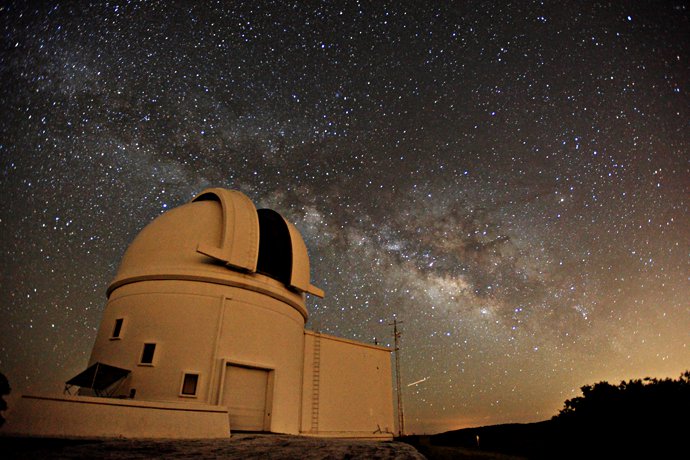
Another of Iair's photos shows the Milky Way behind the dome of Palomar's automated 60-inch telescope. The 60-inch telescope is used nightly to perform follow-up observations on the new transient sources discovered through the Palomar Transient Factory survey. It also is a rapid-response telescope that gives astronomers a look at the optical glow of gamma-ray bursts.

Thursday, May 19, 2011

Shield Your Outdoor Lights

Here is a short video on the importance of shielding outdoor lighting:


The great thing about shielding outdoor lighting as shown in the video is that more light is directed where it is actually needed. Instead of causing glare or shining upward into the sky the light source does not need to be as bright. This means that a lower wattage lighting fixture can be used which will save money.

In spite of the logic behind using fully-shielded lighting, lights like the ones shown below continue to be installed across the country.

Friday, February 18, 2011

Globe At Night Returns

The 6th annual Globe At Night campaign to measure sky brightness around the world is about to begin.
From February 21st to March 6th you'll have the opportunity to measure sky brightness by counting the number of stars visible in the constellation of Orion. It is easy, fun & very worthwhile. So click on over and become a citizen scientist by measuring sky brightness where you live.

Friday, November 5, 2010

Tonight's Delta II Launch - as seen from Palomar

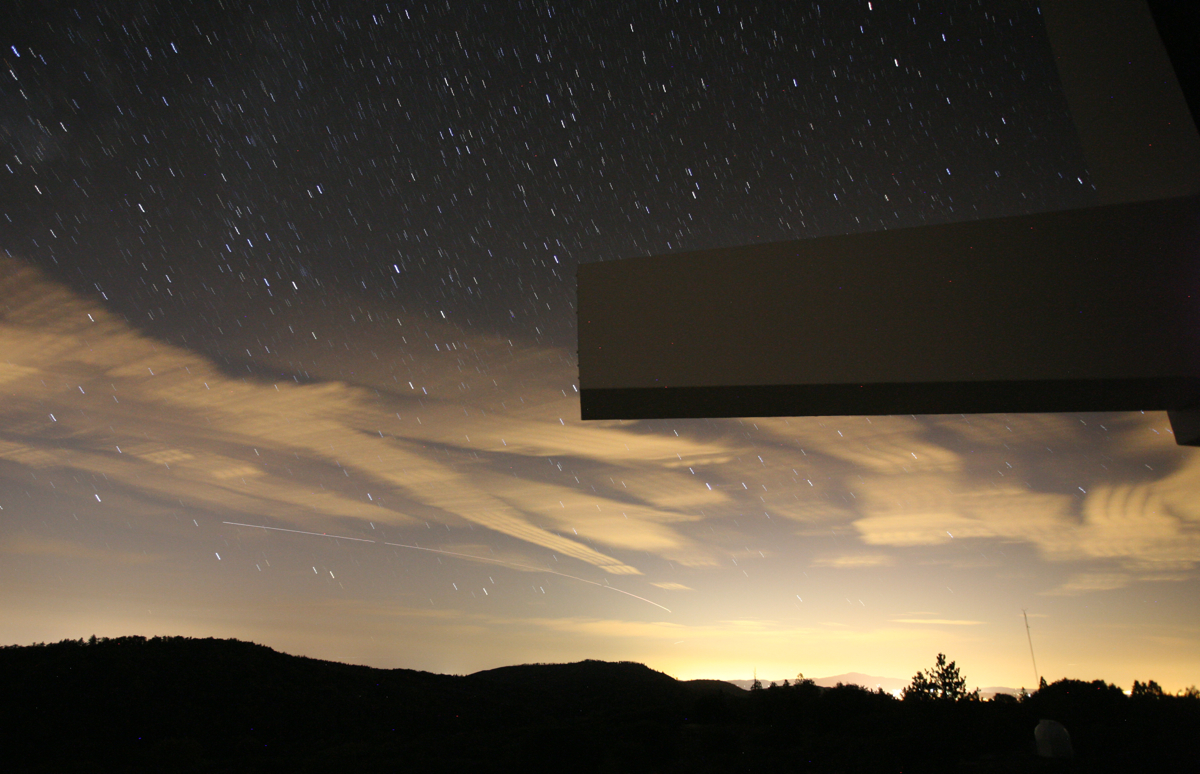
A Delta II rocket was launched tonight from Vandenberg Air Force Base. Here is the view from the catwalk of the 200-inch Hale Telescope:


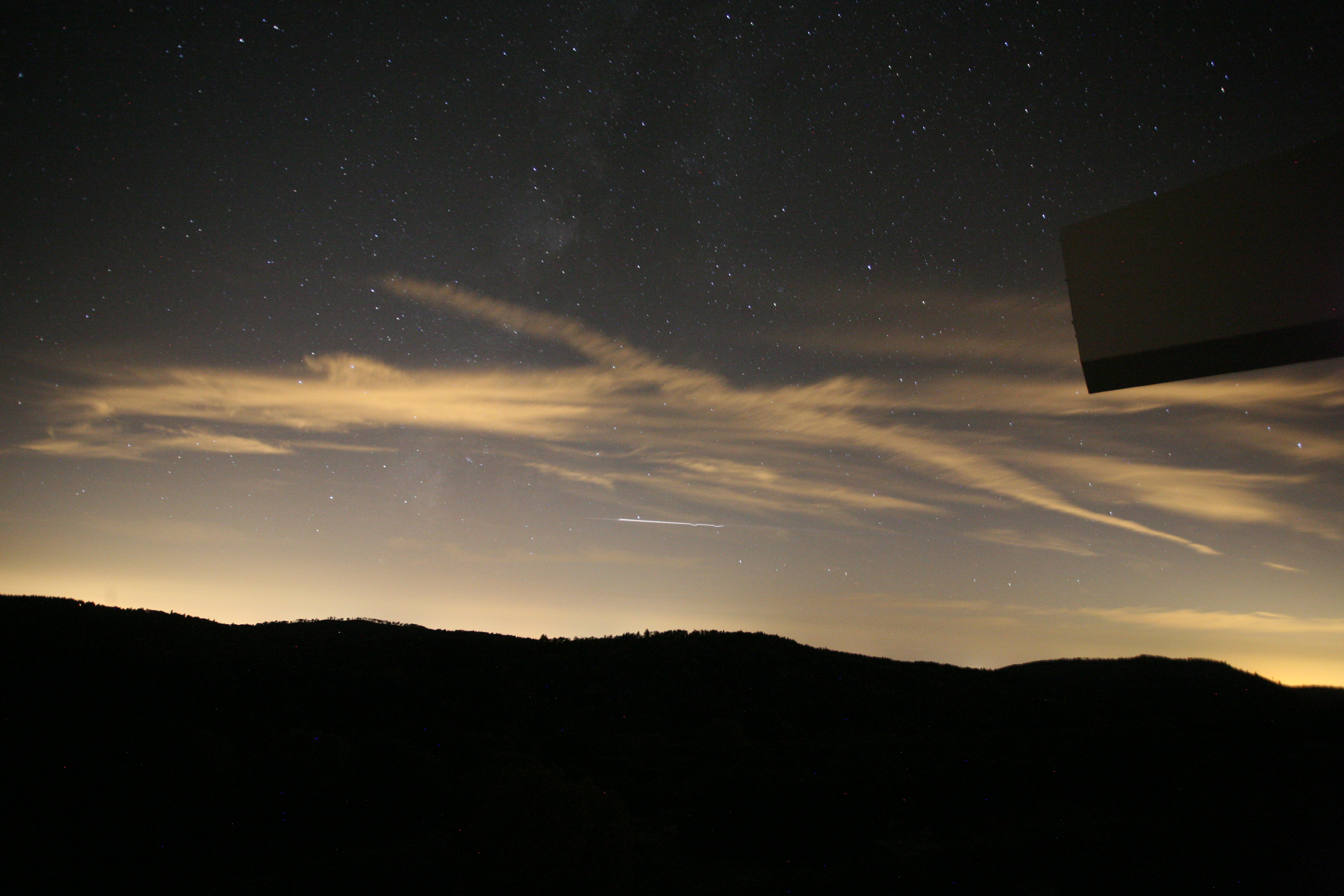
Click to embiggen (full resolution version is here). Light pollution and cirrus clouds dampened the view somewhat. The top photo is 3 30 second exposures combined. The rocket trail is the line beneath the clouds.


This one is just a 30-second exposure. A higher resolution version of the image is here.

Friday, October 29, 2010

Great World-Wide Star Count is Underway!

The Great World-Wide Star Count is underway now through November 12th. It is an easy & fun way to participate in real science and help measure light pollution in the process. Follow the link to learn how to participate.

Thursday, October 14, 2010

Lights Out this Election?

John Garrett runs a blog called Bright Stars Wildomar, which takes on light pollution in his area of Wildomar, CA (north of Palomar in Riverside County). In a recent post he has asked the candidates for Wildomar City Council to comment on light pollution. It is certainly worth reading for anyone in that immediate area, but it is also a task worthy of any voter in any area.

Naturally the issue of light pollution is one of great importance to Palomar. Hopefully it is also of importance to readers of this blog too. Anybody out there care to ask their candidates where they stand on the issue? If so, I would love to hear about it.


If you want to know where I stand on the issue (although I am not running for political office) you might want to attend my talk to the Riverside Astronomical Society on Saturday, October 23. It will be held at 7:30 p.m. in Cossentine Hall, La Sierra University, Riverside.

Also, a reminder, I am told that Dixieline still has a great deal on dark-sky light fixtures. Check out this post for the details.

Friday, October 1, 2010

Astrophoto Friday - the Milky Way & Light Pollution

You may recall that back in August I posted a photo of the Perseid Meteor Shower over Palomar's Hale Telescope taken by astronomer Iair Arcavi. You might also recall his Two Nights at the Palomar Observatory YouTube video.

Iair has processed of some the imagery he shot those two nights to produce this dramatic panorama of the Milky Way over the Hale Telescope.

His composite image is made from 14 separate exposures.

Compare it to the other panorama image of the Hale and the Milky Way - Wally Pacholka's Milky Way over Palomar you'll notice some dramatic differences.


Apart from the way the the two images were processed, the weather was very different on the two nights.

In the image taken by Wally there were a few clouds in the sky and a vast sea of them below Palomar Mountain. The low clouds are not visible in his image, but they effectively dimmed the city lights.

Iair's image there were no low clouds blocking the city lights making the ugly glow of light pollution easily visible. Notice how the light of the Milky Way galaxy is vanquished by the bright glow of the many lights in San Diego and Riverside Counties. There is even a smaller glow on the right produced by the lights of Palm Springs.

Because Nature does not always bring in the low clouds that protect Palomar Observatory's view of the universe, we ask all our neighbors to help do their part by making sure that nighttime lights are properly shielded and turned off when not absolutely needed.

Wednesday, September 22, 2010

Palomar All-Sky Movie: Sept 10 - 14, 2010

Here is a short video covering ~116 hours of night and day from the new Palomar Observatory all-sky camera:


Here is a direct link to the video on YouTube.

Notice at night in the upper and lower right it never gets completely dark. This is light pollution, aka sky glow, from city lights.

As you can see in the daytime, the sun completely saturates the camera's CCD detector causing it to heavily bleed out on to other parts of the image. In spite of this, the camera is still a good daytime cloud detector (when we have clouds).

The camera is not yet up for the public, but that will be coming soon.

Wednesday, September 15, 2010

Feeling Blue from Light Pollution

There are a lot of changes coming in the world of street lighting that could have a major impact on operations at Palomar Observatory. For a short perspective on it have a look at this recent article in the San Diego Union Tribune newspaper.

In summary there is a big push to convert away from the astronomy-friendly low-pressure sodium lighting installed to help protect Palomar Observatory in favor of full-spectrum lights. These full spectrum lights are rich in blue light which disproportionately brighten the night sky. While the lights will be dimmer and thus save energy, their impact on astronomical research will be felt.

The International Dark-sky Association has come out against such changes. You can read their research paper Visibility, Environmental, and Astronomical Issues Associated with Blue-Rich White Outdoor Lighting here. A shorter, summary piece Seeing Blue is here.

While these are big issues for cities and organizations to sort out don't forget that you can make a difference right at your own home. By choosing to turn off unneeded lights or installing a dark-sky friendly light fixture you can improve the sky for everyone in your area. If your area happens to be San Diego County, don't forget that thanks to SDG&E Dixieline Hardware now has a great deal on lights that are dark-sky friendly.

Sunday, August 22, 2010

Get Your Dark-sky Light Fixtures in San Diego County

It is a fact of life that outdoor lights are need. Visibility, safety and security are necessary.

Unfortunately there is too much light at night as much of it does not help with visibility, safety or security. This wasted light is also wasted energy. Bad lighting often causes glare which can reduce visibility -- the opposite of what a light is supposed to do. Well shielded fixtures eliminate glare and put light where its needed to see well.

The San Diego Chapter of the International Dark-sky Association has combined forces with Lights of America, San Diego Gas & Electric, Dixieline, and Palomar Observatory to offer an affordable and very effective Outdoor Light Fixture to San Diego Residents. How affordable is it? It checks in at less than $10.00 each after rebates! That is a deal.

This fixture is available NOW at any San Diego County Dixieline Stores. Hurry to get yours and take advantage of this great limited time offer.


What does the observatory like about this? When properly installed it is a full-cut off fixture, meaning that there is no up light. While it is not a low-pressure sodium (our favorite!), they aren't well suited for lights around the house. This fixture is of a low color temperature (2700K), which gives a warm glow that limits the amount of blue light making it better for astronomy than a high temperature light.

Friday, August 13, 2010

Astrophoto Friday - the Milky Way

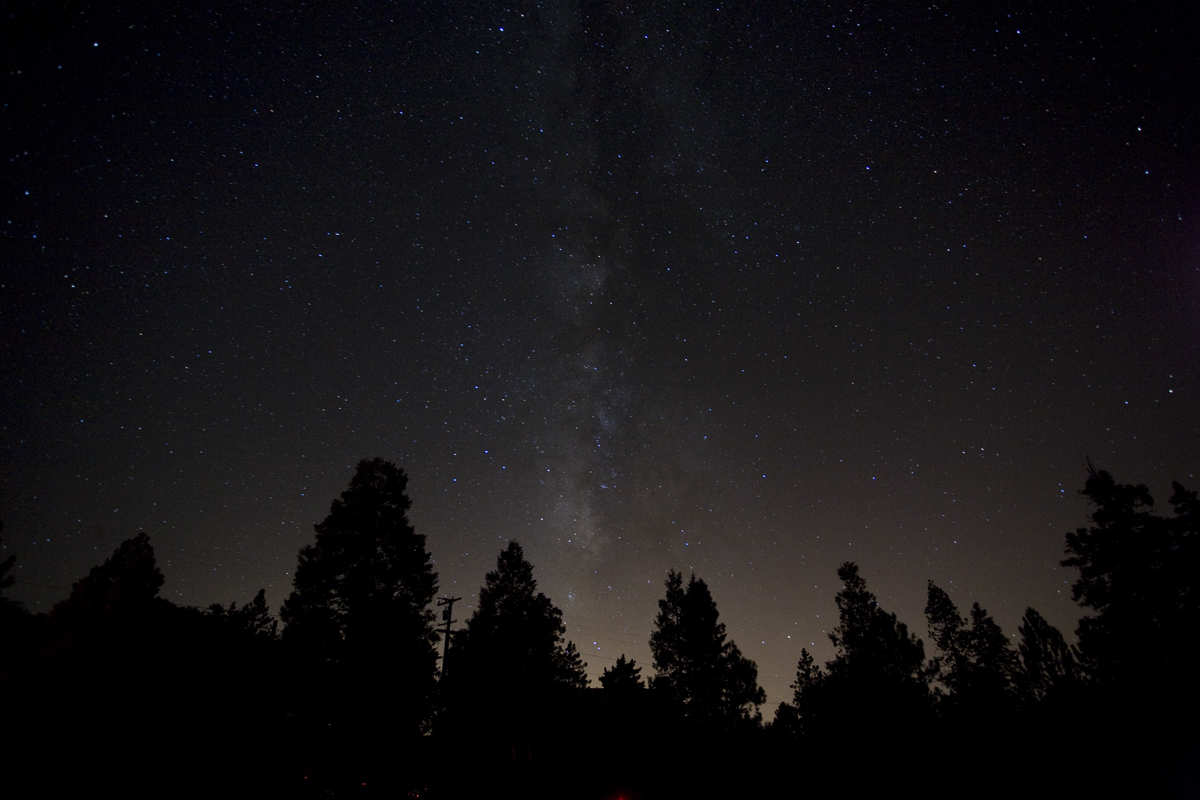
It has been a busy week, but I did manage to take a moment to snap this photo of the summer Milky Way on Wednesday evening:


It was a beautiful evening, but you can certainly notice the light pollution coming from the many lights of San Diego County.

Due to an active marine layer San Diego has had a colder than normal summer this year. This has generally been good news for the observatory as the low coastal clouds often effectively block the light produced by the cities below, giving the observatory darker skies.

Wednesday, June 23, 2010

A Dark Skies Video from McDonald Observatory

Check out the new video below from McDonald Observatory:


Here is a direct link to the video on YouTube.

McDonald Observatory will also be be promoting dark skies awareness through its
nationally syndicated StarDate radio program, its Spanish-language radio program Universo.

The radio programs will feature dark skies information daily in the coming week (June 28-July 4). For more information on these programs and to find a station in your area, visit stardate.org or radiouniverso.org

For more information visit the McDonald Observatory’s Dark Skies Initiative site.

Friday, June 18, 2010

Astrophoto Friday - Milky Way over Palomar

It is Astrophoto Friday. Today instead of a photo taken with one of the Palomar telescopes, it is time to see the sky from Palomar.


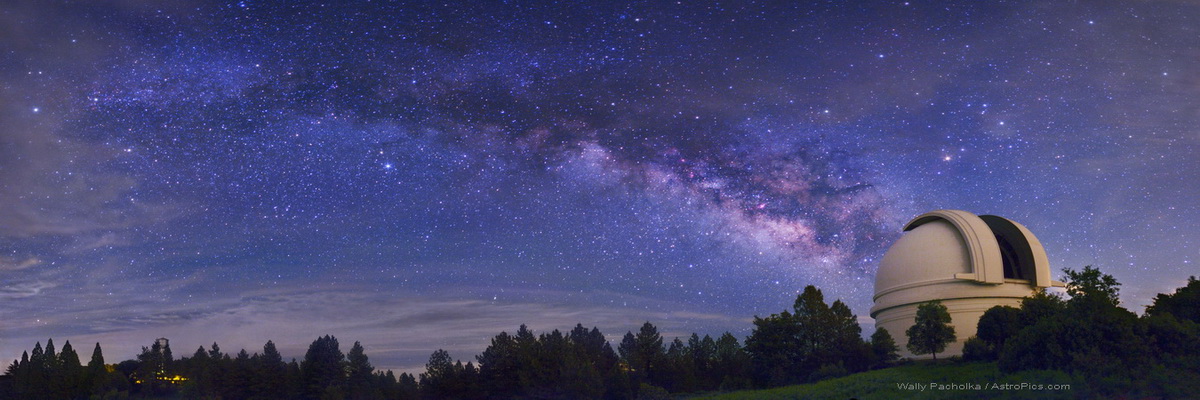
The Milky Way Galaxy over the Hale Telescope as captured by Wally Pacholka of AstroPics.com.

Wally recorded this image just over a week ago on the night of Thursday June 10, 2010. His photo serves as a reminder that the battle between astronomy and light pollution has not yet been lost and that the skies over Palomar are still beautiful and worth fighting for.

Thursday, April 29, 2010

Beautiful Nighttime Time-Lapse Movies

If you have a few minutes to spare in your day you might want to check out the video embedded below:

Timescapes Timelapse: Mountain Light from Tom Lowe @ Timescapes on Vimeo.


If you have a few more minutes, check out Tom Lowe's other videos on his Timescapes page on Vimeo. It is wonderful stuff.

Saturday, March 27, 2010

LIght Pollution Stories & Earth Hour Tonight

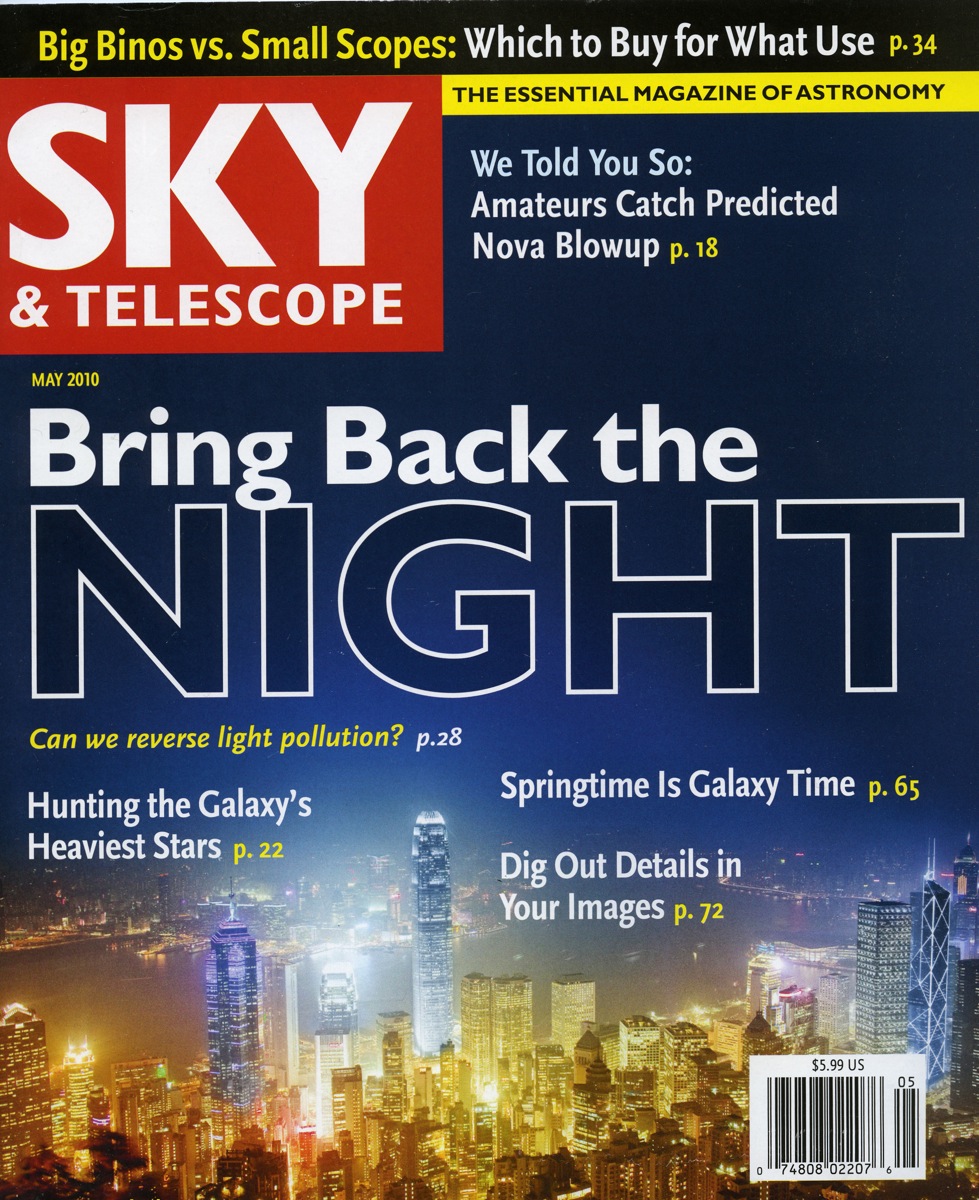
The May issue of Sky & Telescope magazine has hit the mailboxes sporting a cover story on light pollution. Kelly J. Beatty gives an overview of the light pollution problem with some startling facts and possible solutions. Also, look for the opinion piece by Constance Walker where she argues that education is key to solving the problem of light pollution.


In another publication, be sure to check out my article "Dimming the Lights: Astronomy and light pollution" in the current issue of the on-line Glimpse Journal. Alas, a subscription is required to read entire thing.

Finally tonight is Earth Hour. While this is billed as an event to fight global warming, it is a great opportunity to highlight how much unnecessary light at night can be found in our cities and that the world will not devolve into chaos if some or all of it is shut off. Last year there wasn't much of a change from Palomar Mountain. This year's event takes place under a bright moon, but there may actually be larger participation in the event.

Monday, March 22, 2010

Dark Skies Podcast

Just a reminder that the 365 Days of Astronomy podcasts continue. Just last weekend there was a new one released by Constance Walker: Dark Skies Crusader Sheds Light on Light Pollution.

I confess that I have fallen somewhat behind on them, but many of the podcasts are quite good and if you aren't listening to them I recommend giving it a shot.

Continuing on the topic of light pollution, remember that Earth Hour is Saturday, March 27.

Thursday, March 11, 2010

Dark Sky Giveaway and More!

March must be light pollution month. The International Dark-sky Association is running a contest - the Dark Sky Giveaway.


Yes, if you make a donation to the IDA and you can help fight light pollution and you might win a sweet set of fine eyepieces.

Speaking of light pollution, don't forget that GLOBE at Night continues until March 16 and that is followed by Earth Hour at 8:30 p.m. (local time everywhere) on March 27. Be sure to check out their 2010 video.

Thursday, March 4, 2010

GLOBE at Night 2010 is Underway!


From now until March 16 you can participate in GLOBE at Night. It is easy, fun and free. In the process you can help evaluate the effect that city lights have in creating light pollution.

From their press release:

With half of the world’s population now living in cities, many urban dwellers have never experienced -- and maybe never will -- the wonderment of pristinely dark skies. This loss, caused by light pollution, is a concern on many other fronts as well: safety, energy conservation, cost, health, and effects on wildlife. Yet, even though light pollution is a serious and growing global concern, it's one of the easiest environmental problems that you can address on local levels.

Participation in the international star-hunting campaign, GLOBE at Night, helps to address the light pollution issue locally as well as globally. From March 3rd to 16th, 2010, everyone all over the world is invited for a 5th year to record the brightness of the night sky. The campaign is easy and fun to do: first, you match the appearance of the constellation Orion with simple star maps of progressively fainter stars. Then you submit your measurements online, including the date, time, and location of your comparison. After all the campaign's observations are submitted, the project's organizers release a map of light-pollution levels worldwide. Over the last four annual campaigns, volunteers from more than 100 nations have contributed 35,500 measurements. Nearly 45% of these came during last year’s campaign as part of the celebration of the International Year of Astronomy (IYA).

"One of the most creative examples of GLOBE at Night participation in IYA2009 was a community-wide effort in Indiana," says Connie Walker of NOAO, director of the GLOBE at Night program. Thousands of students from a school district observed Orion from their backyards, and these kids ended up contributing 20% of the 2009 GLOBE at Night data. But they did not stop there. They demonstrated how much darkness they'd lost by building a 3-D model of the land area covered by their data. Starting with 35,000 Lego blocks stacked six layers high (the higher the stack the darker the sky), they took away 12,000 blocks to represent a sky nine times brighter than an ideal sky. The students presented their findings to local leaders and were honored for their efforts.

"Monitoring our environment will allow us as citizen-scientists to identify and preserve the dark sky oases in cities and locate areas where light pollution is increasing," says Walker. "All it takes is a few minutes during the March 2010 campaign to measure sky brightness and contribute those observations on-line. Help us exceed the 15,700 observations contributed last year. Your measurements will make a world of difference."

Friday, January 15, 2010

The Palomar Sky

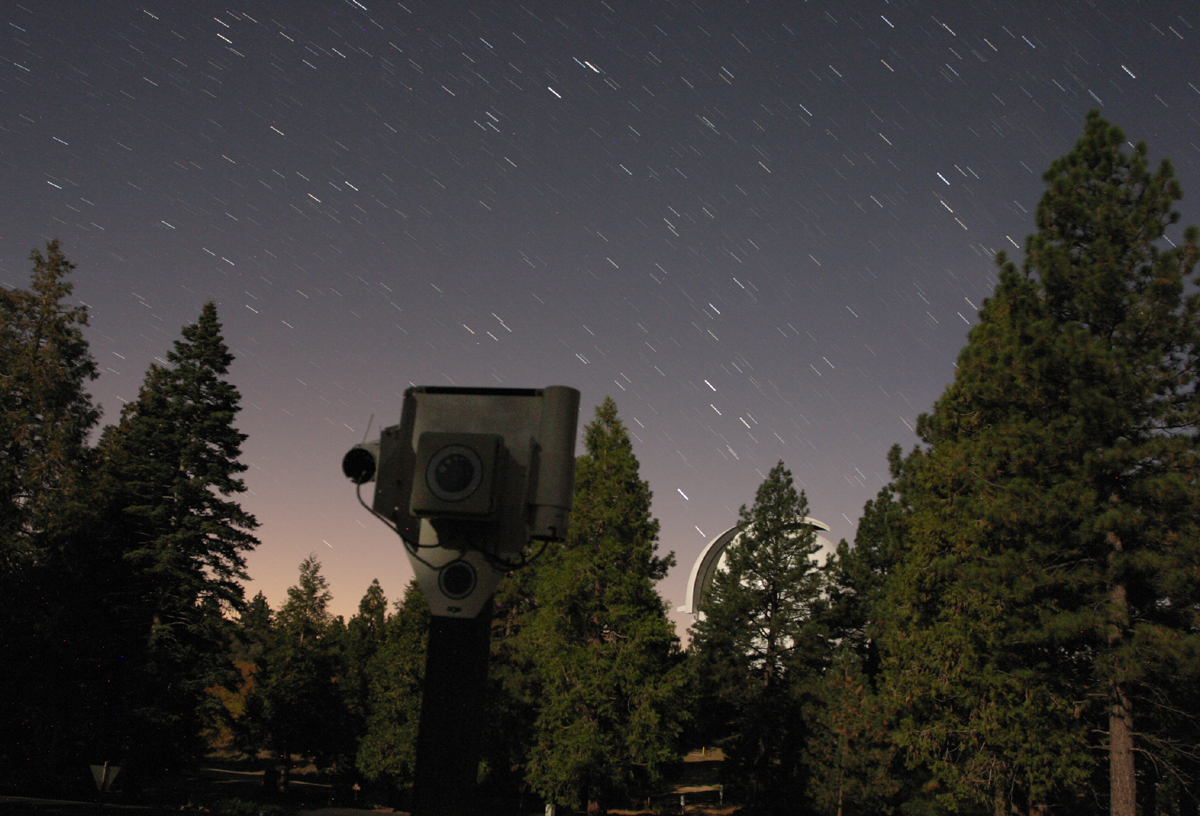
As a teaser, this is a shot of one of our sky brightness monitors (with the dome of 200-inch telescope behind the tree) at Palomar Observatory. We have a pretty cool program involving them that we will launch later this year.

You'll be able to read all about the Palomar Sky right here on Palomar Skies.

Saturday, December 26, 2009

This and That

Palomar Observatory is now back on its regular winter hours and open to visitors 9 am - 3 pm daily.


Astrobiology Magazine has named the discovery of exoplanet VB 10b, found using Palomar's Hale Telescope, as one of their Astrobiology Top 10 for the year.

Remember the 365 Days of Astronomy podcasts are continuing for 2010, but there still many open dates, even for the month of January.

Miller McCune magazine published an article on the dark-skies movement in Borrego Springs, CA: Stary, Stary Skies California desert town takes back the night, wins rare "Dark Sky" award.