Thursday, October 21, 2010

Looking Through the Telescope

This isn't exactly what people usually have in mind when talking about looking through the Hale Telescope.

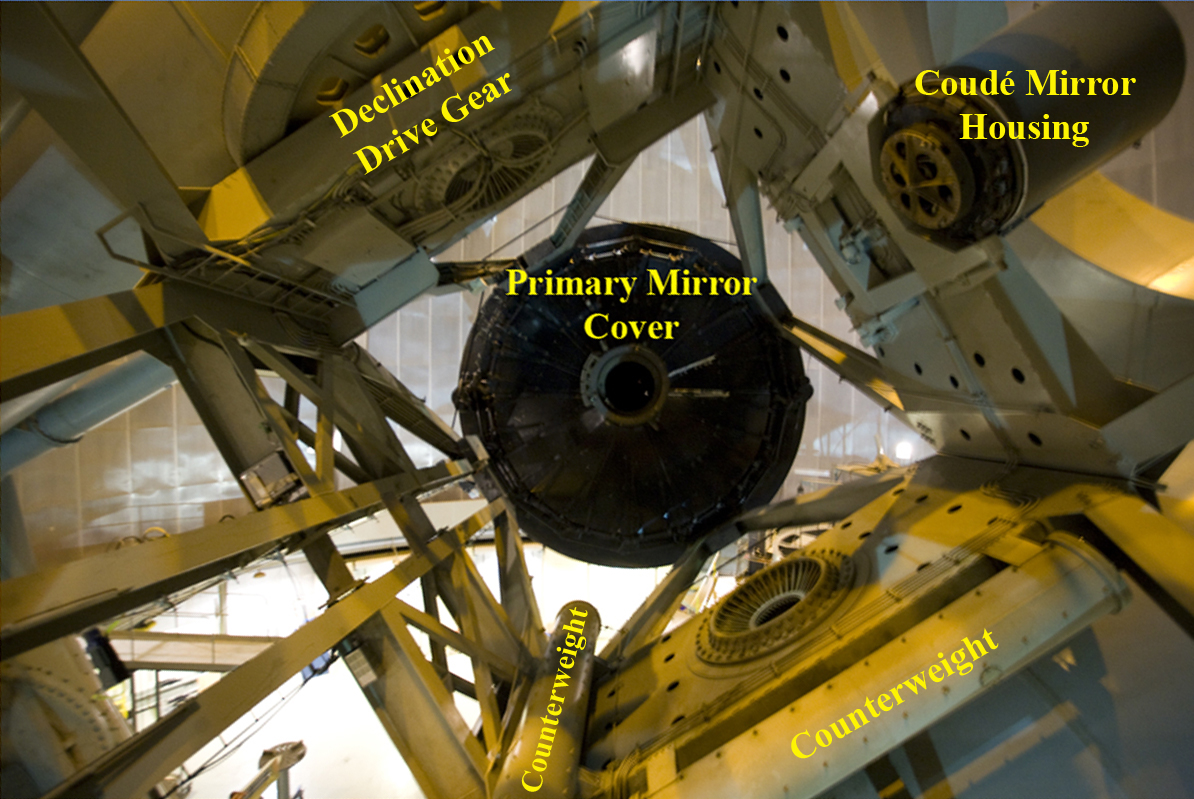
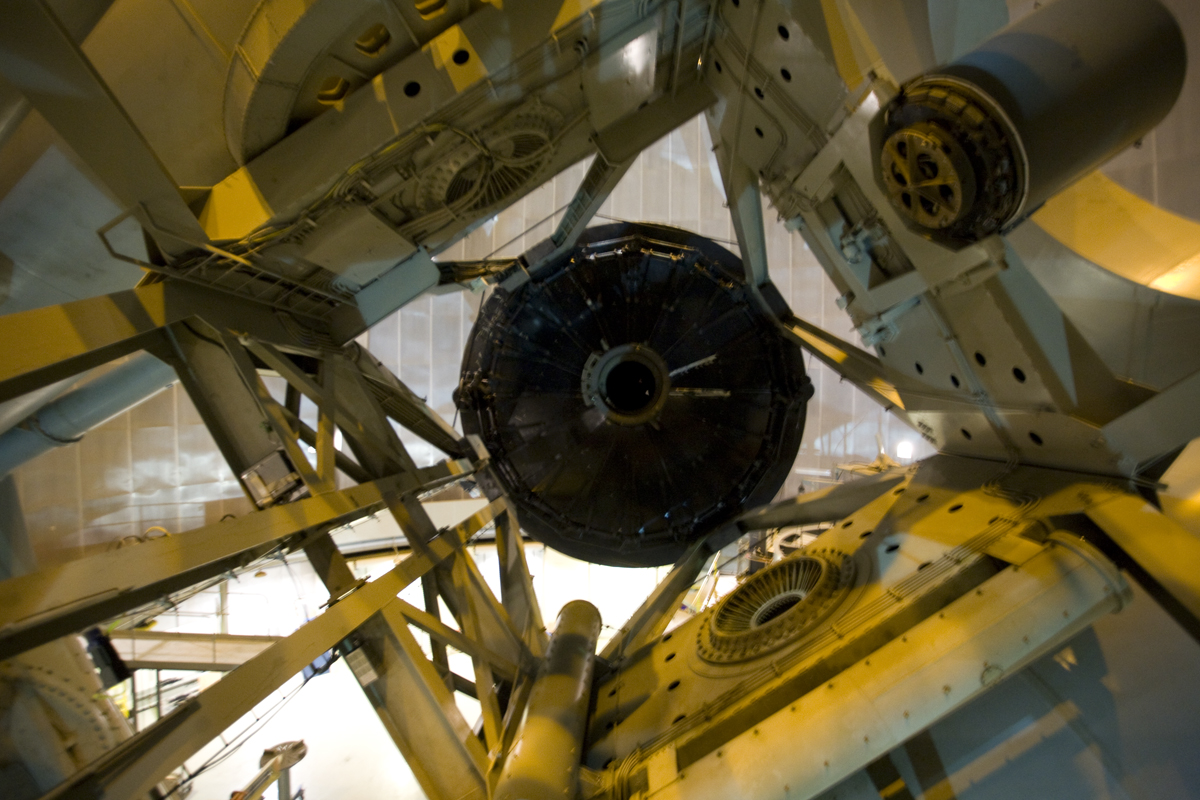
Here is the last picture to post from the recent secondary mirror inspection. At the end of the work I had the opportunity to go up in the basket to see the mirror. Alas, there wasn't enough light for me to capture the secondary, but the view looking inside the tube of the Hale Telescope from just below prime focus was pretty good.

There is a lot in this photo. So I have prepared an annotated version that shows off some of the major parts:

Secondary Inspection Movie

Here is a short, time-lapse movie from last week's secondary mirror inspection (photos in the previous post) as captured by the Hale Telescope's webcam.


Here is direct link to the movie on YouTube.

Wednesday, October 20, 2010

Inspecting the Hale Telescope's Secondary

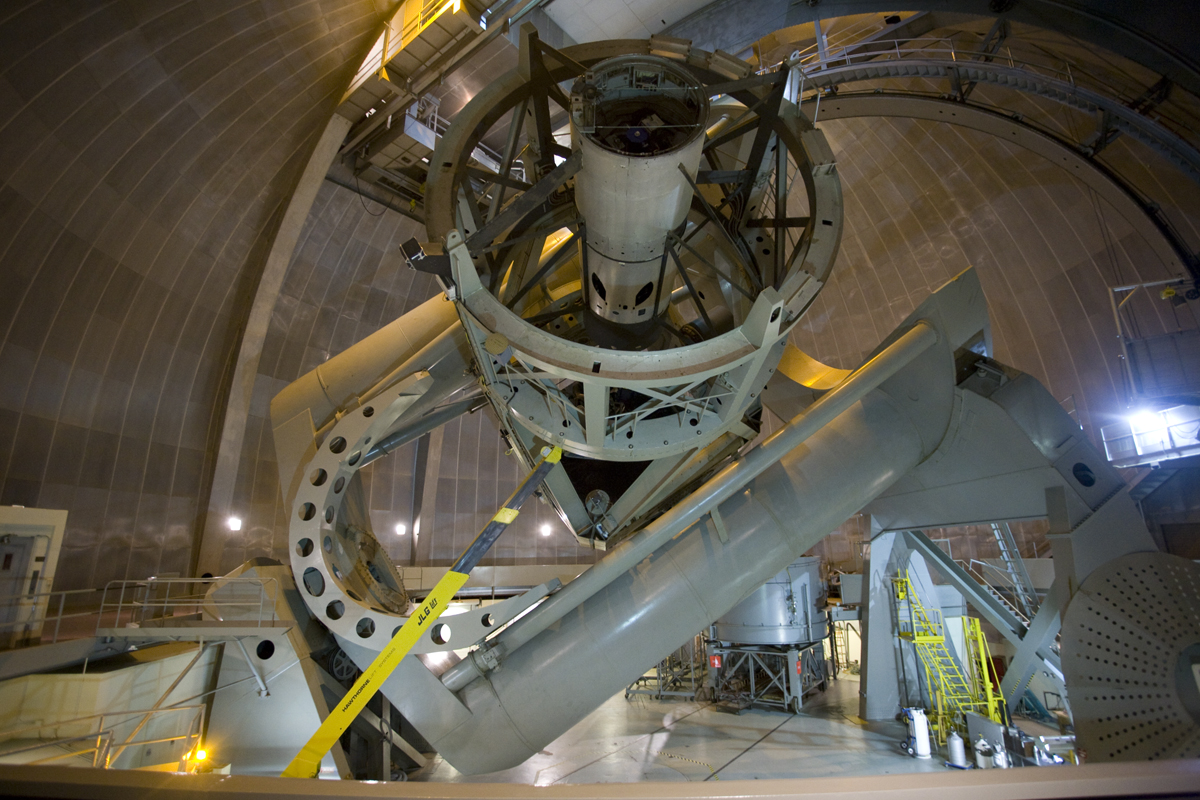
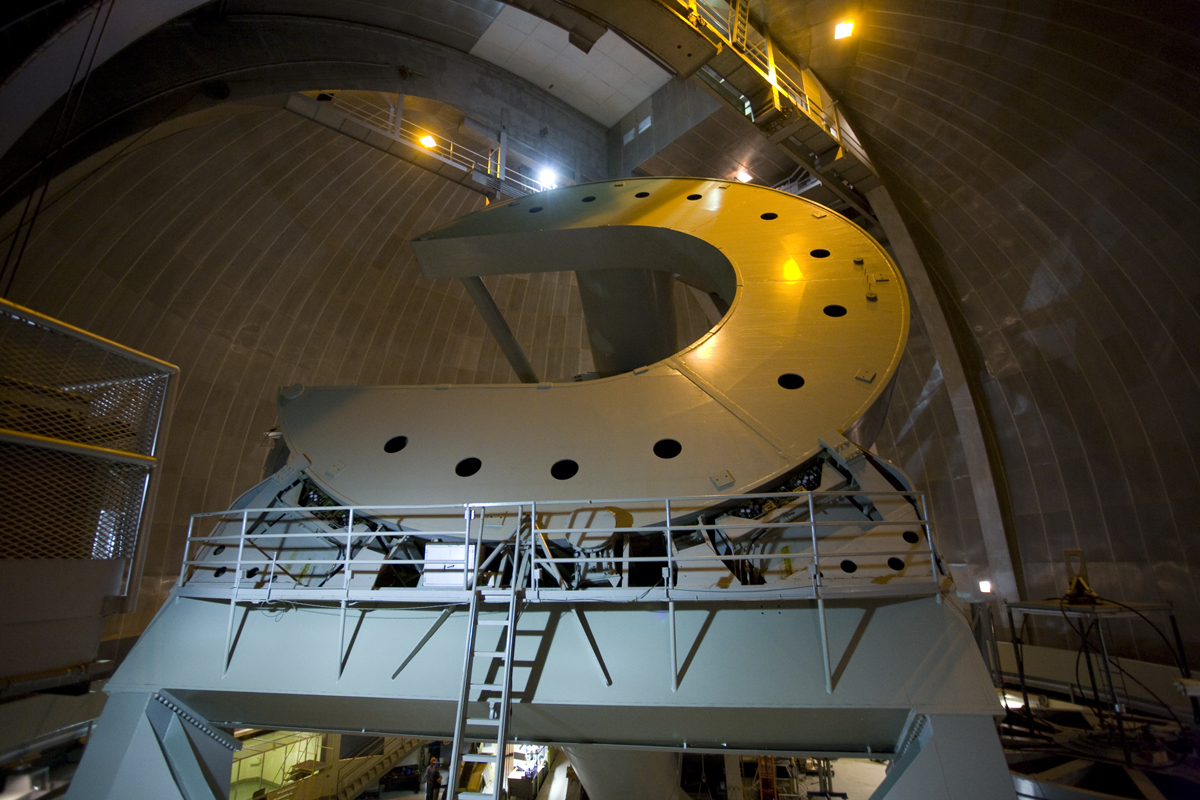
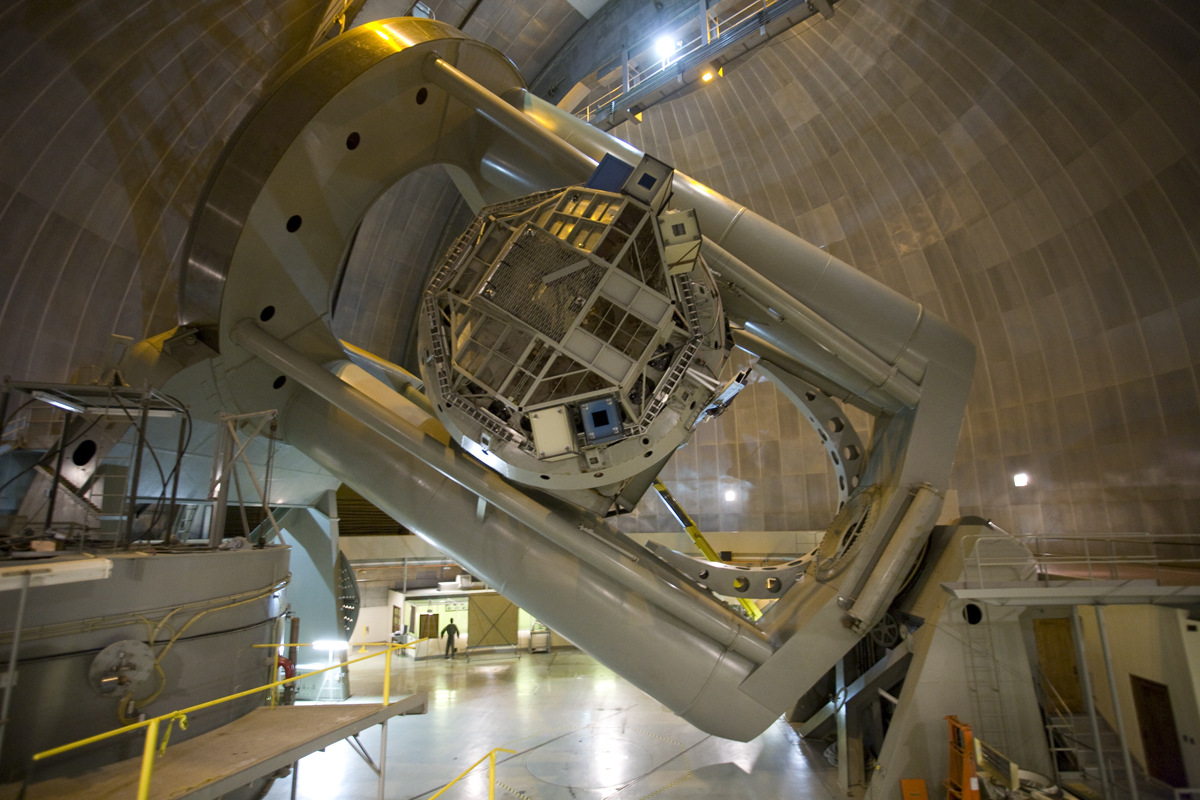
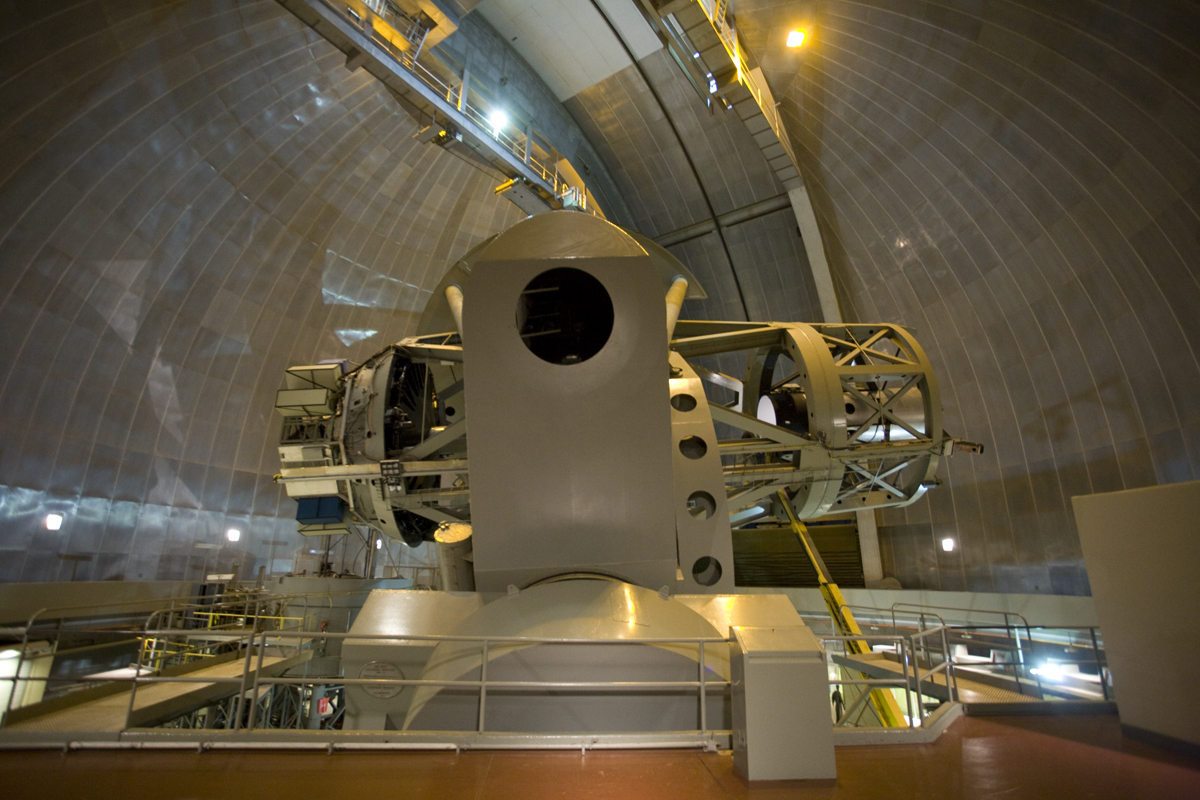
One day last week it was time for a routine inspection of one of the Hale Telescope's three secondary mirrors. The extreme pointing of the telescope to the east provided for easier access for the crew to get to the secondary mirror and it made for some nice photo opportunities.

Here is the view of the telescope from the inside catwalk. The photo was taken from the east side of the telescope.

The view from the north of the telescope's horseshoe reveals just how far to the east it was pointed. For those who are really curious, it was pointed 5 hours 41 minutes east of zenith.

Here is the view from on the observing floor on the north side of the telescope. The inspection crew is in the basket of the yellow lift.

From the catwalk, west of the telescope, the view showed off the bottom of the Cassegrain cage.

The view from south of the telescope reveals that it wasn't quite pointed to the horizontal -- but it was pretty close.

Tuesday, October 19, 2010

Rain & Fog on Palomar

Anyone planning on traveling to Palomar Mountain today or in the next few days should pay close attention to the weather and road conditions.

Rain and fog are currently making for difficult driving conditions in the area. Additionally, rocks in the roads are likely during these times.

Be careful out there.

Monday, October 18, 2010

Palomar History Photo of the Week - Resistance is Futile

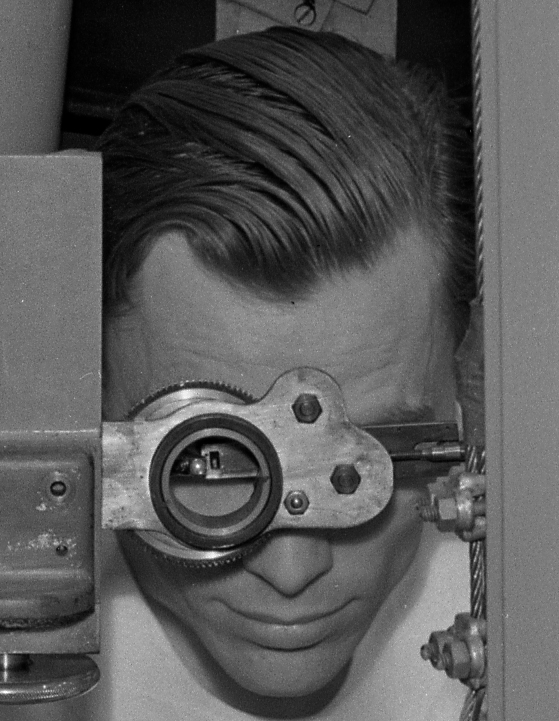
Looking at this 1938 photo from the Caltech optical shop you might think that this optician was the inspiration for the Borg of the Star Trek universe.

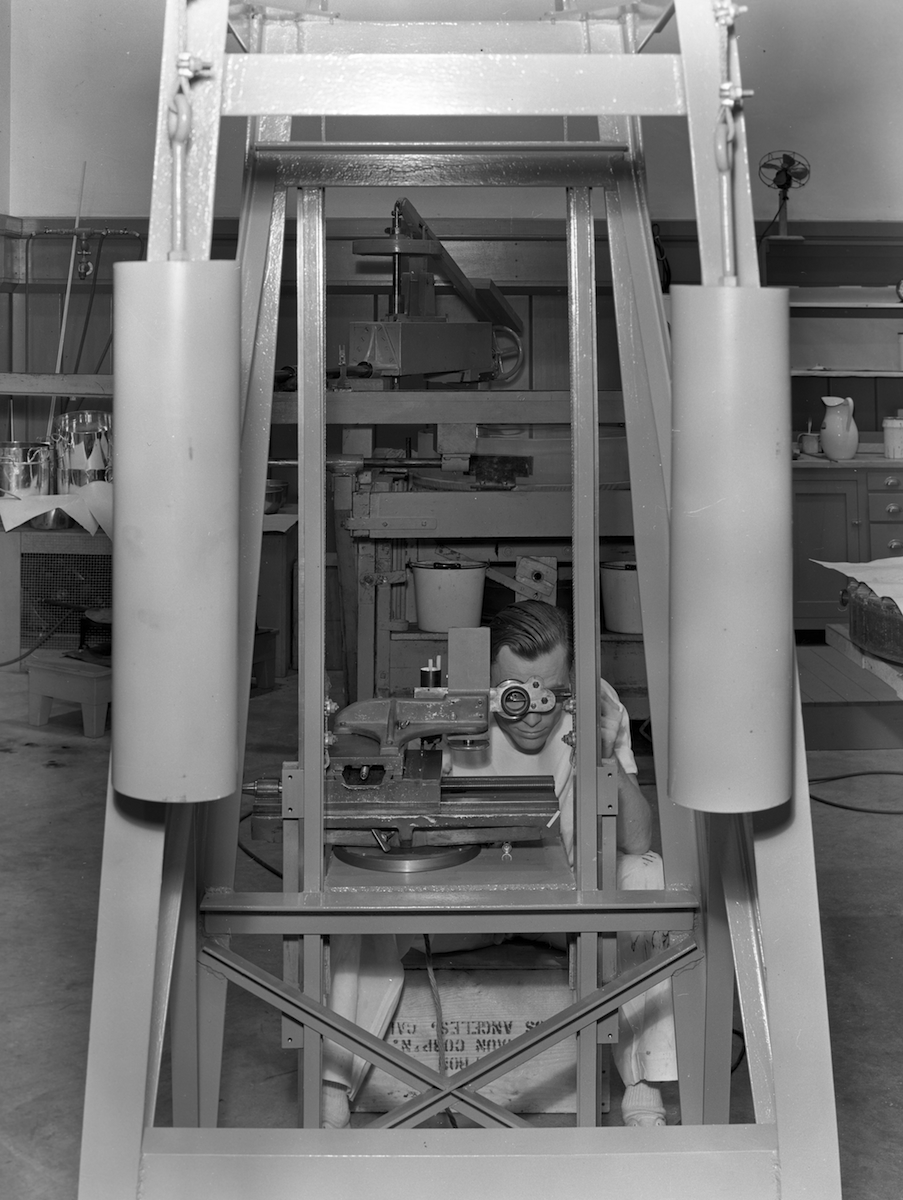
In actuality he was performing a Foucault knife-edge test to measure the shape of one of the secondary mirrors for the 200-inch telescope.

By showing the full photo you can get a better sense of the mechanism that was being used.

Friday, October 15, 2010

Astrophoto Friday - Neptune with Adaptive Optics

It is Astrophoto Friday! For your enjoyment this time is the planet Neptune.


This image of Neptune was taken on 11 August 2006 with the Palomar Observatory's 200-inch Hale Telescope and its adaptive optics system. The adaptive optics system removes the blurring effects of Earth's atmosphere to produce very high resolution images.

Don Banfield of Cornell University collected and processed the data to produce this false color image. The image was recorded in three near-infrared wavelengths: "J" centered at 1.250 microns, "H" at 1.635 microns, and "Ks" at 2.150. The images were combined as red, green, and blue to create this false-color image. A wide assortment of clouds can be seen at Neptune's atmosphere. The multi-colored object passing above Neptune is one of its moons which moved during the exposures.

Thursday, October 14, 2010

Lights Out this Election?

John Garrett runs a blog called Bright Stars Wildomar, which takes on light pollution in his area of Wildomar, CA (north of Palomar in Riverside County). In a recent post he has asked the candidates for Wildomar City Council to comment on light pollution. It is certainly worth reading for anyone in that immediate area, but it is also a task worthy of any voter in any area.

Naturally the issue of light pollution is one of great importance to Palomar. Hopefully it is also of importance to readers of this blog too. Anybody out there care to ask their candidates where they stand on the issue? If so, I would love to hear about it.


If you want to know where I stand on the issue (although I am not running for political office) you might want to attend my talk to the Riverside Astronomical Society on Saturday, October 23. It will be held at 7:30 p.m. in Cossentine Hall, La Sierra University, Riverside.

Also, a reminder, I am told that Dixieline still has a great deal on dark-sky light fixtures. Check out this post for the details.
Wednesday, October 13, 2010

PALM-3000 Compoents Arrive

It is always nice when new things come to the observatory. Today the components for the new PALM-3000 upgrade to our adaptive optics system were delivered to the dome of the Hale Telescope.
The PALM-3000 team now has a good four months of work to complete on the system which is currently expected to see first light in February 2011.


For more information you can read an article here on the PALM-3000's new deformable mirror.

News & Discoveries from Palomar Transient Factory

The total number of supernovae discovered via the Palomar Transient Factory (PTF) survey has climbed to 800.

The heart of the survey is Palomar's 48-inch Samuel Oschin Telescope.

Be sure to check out the article from Space.com on PTF and astronomical data mining.

According to the article each night the 48-inch "telescope picks up 1.5 million candidate transients — fleeting astronomical phenomena — in the sky. Ten thousand or so of these are bona fide objects, and about 10 turn out to be new. Finding a few needles in a giant haystack night after night is a relatively new challenge for astronomers".

One of the more recent announcements out of the survey is that of the discovery of a possible "super-Chandrasekhar Type Ia Supernova". That would be the explosion of a white dwarf star that is more massive than is typically expected. They may possibly result from the merger and detonation of two white dwarf stars. For more on Type Ia supernovae, check out this fine summary from OPT telescopes.

Monday, October 11, 2010

Palomar History Photo of the Week - The Electro-Magentic Sweeper

The Perfect Machine by Ronald Florence is the authoritative history of the building of the 200-inch Hale Telescope. The book is a detailed and often moving account of what happened and why on the Palomar project.

Here is a short passage from the book describing some of the conditions in the Caltech optical shop as people were polishing the 200-inch mirror:

The obsession with cleanliness in the optical shop was more than many men could stand. The floors were swept and washed daily. A worker rolled a magnet over the floor daily, sometime several time a day, to pick up even tiny specks of metal. If a speck was found it was put into an envelope, and the search began for the culprit machine. Was it a chip off a gear? Abrasion of some metal part that no one heard because of the noise of the grinding machines? A foreign speck off the shoes or uniform of a careless worker? Whatever the cause, it had t be found. A speck of metal under a polishing tool on the surface of a disk could make a scratch that might destroy months of work.

The image that came to my mind of a worker rolling a magnet over the floor to pick up stray bits of metal didn't equal the reality of the device that they actually used. I present to you the Electro-Magnetic Sweeper:

An amazing looking device! Here it is in action next to the 200-inch Pyrex disc:

Even more amazing to me is the fact that both of the people in the photo above the glass are smoking pipes! Both photos are from December 1938.