Thursday, August 26, 2010

Cleaning the 200-inch Telescope

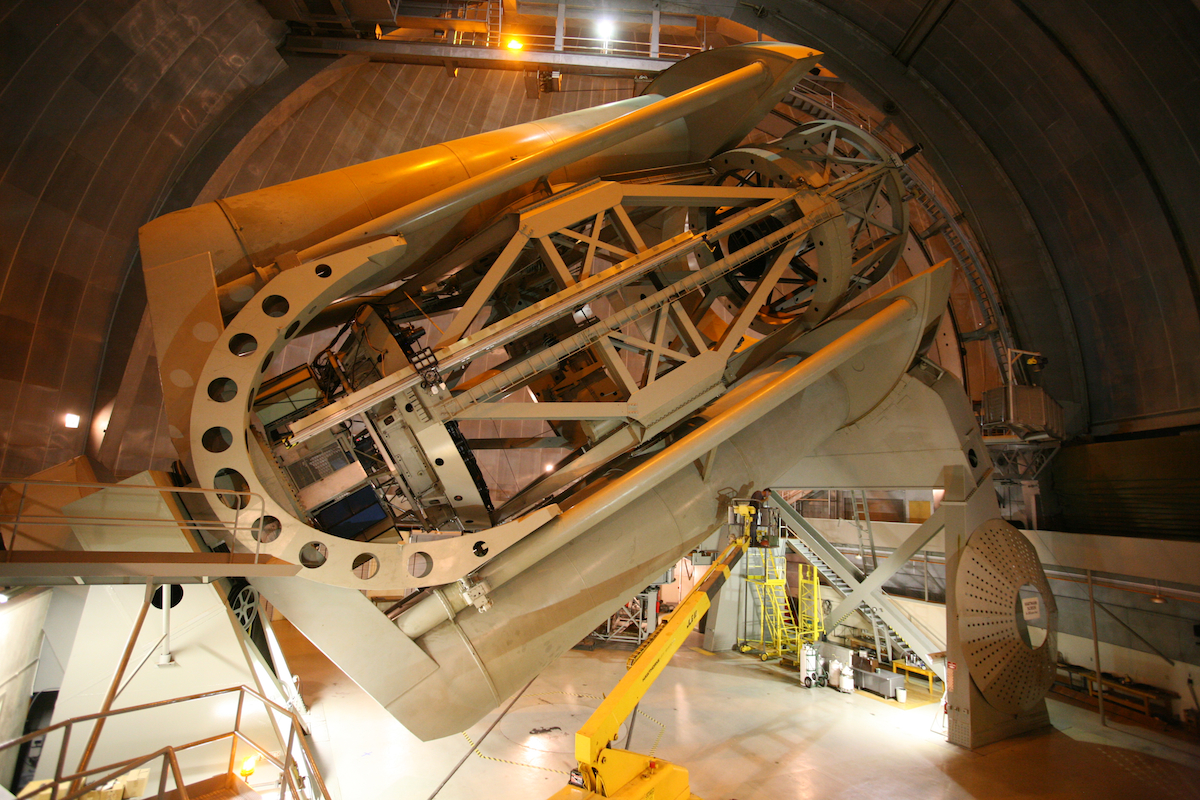
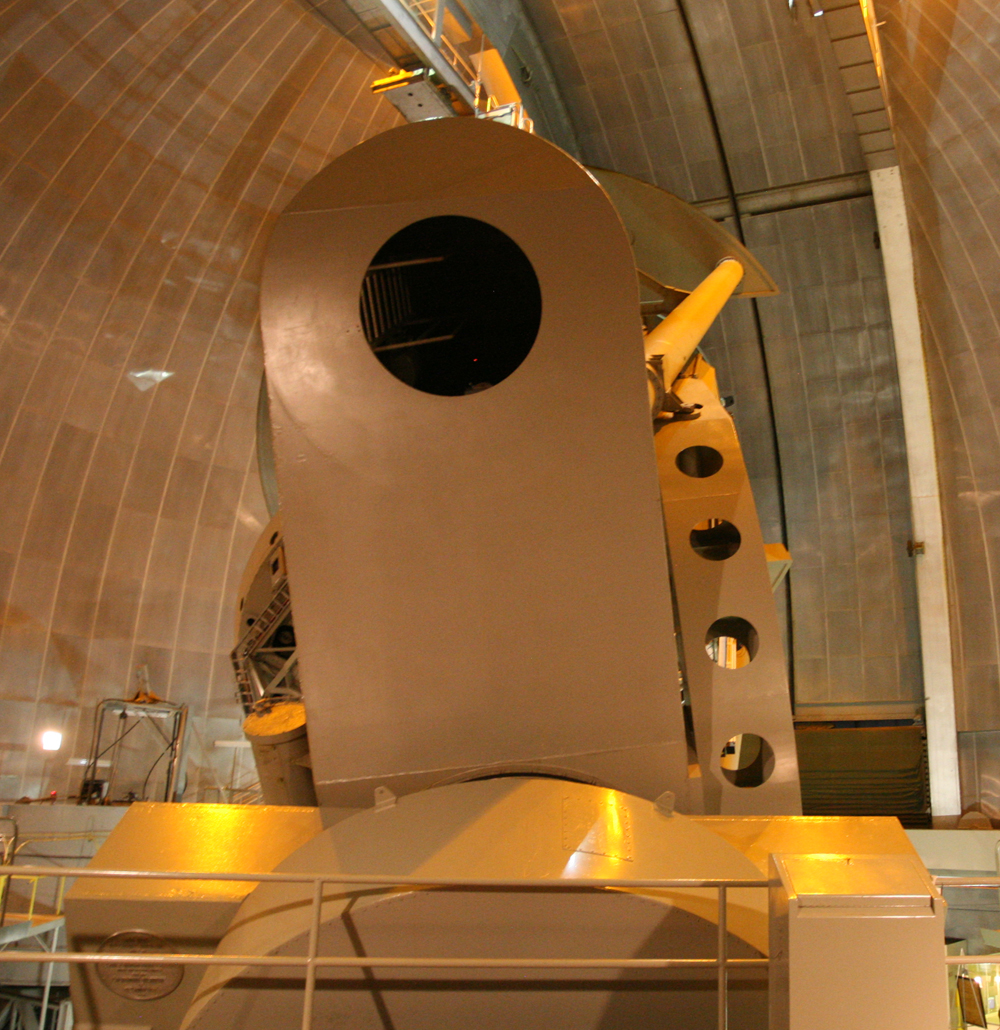
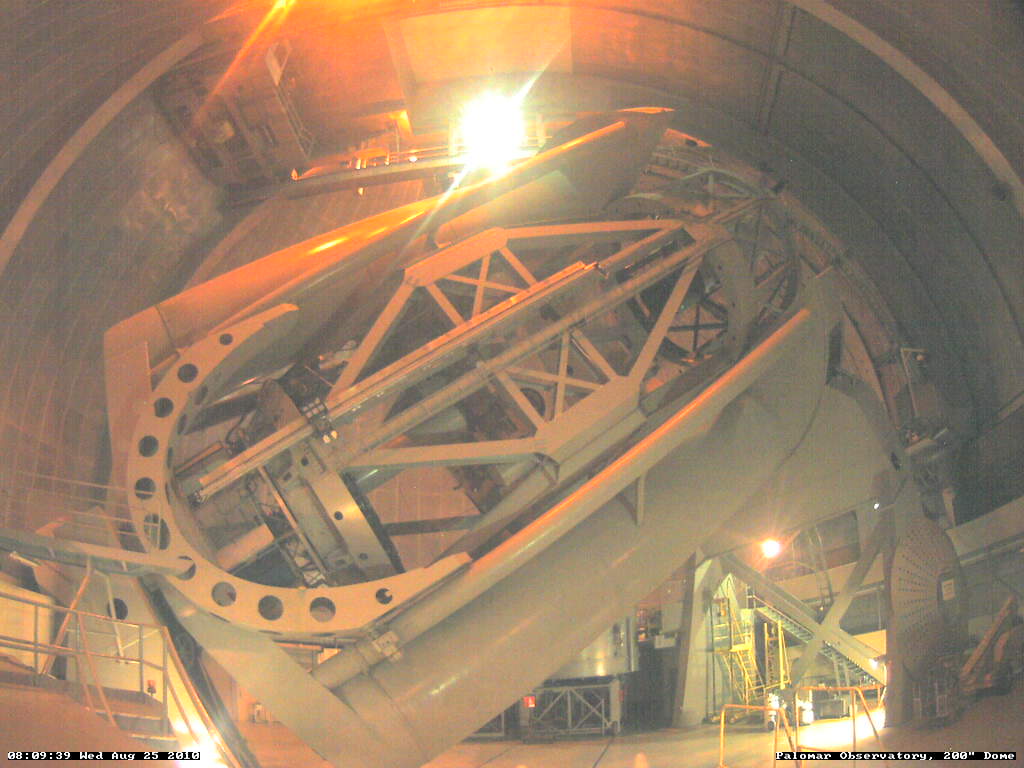
If you have checked the Hale Telescope Web Camera in the last few days you may have seen the 200-inch pointed to the extreme north, as it is here in this view from yesterday morning:


This is being done so that the support structure of the telescope can be washed.


It is a tough job, but somebody's gotta do it.

Having the telescope pointed to the extreme northeast, as it is for these shots, certainly gives some unique photo opportunities. Wouldn't you agree?


The work is continuing for a while yet and is not a disruption to nighttime work. Last night, for instance, the telescope saw a full 10 hours of use.

Monday, August 23, 2010

Palomar History Photo of the Week - August 23, 2010

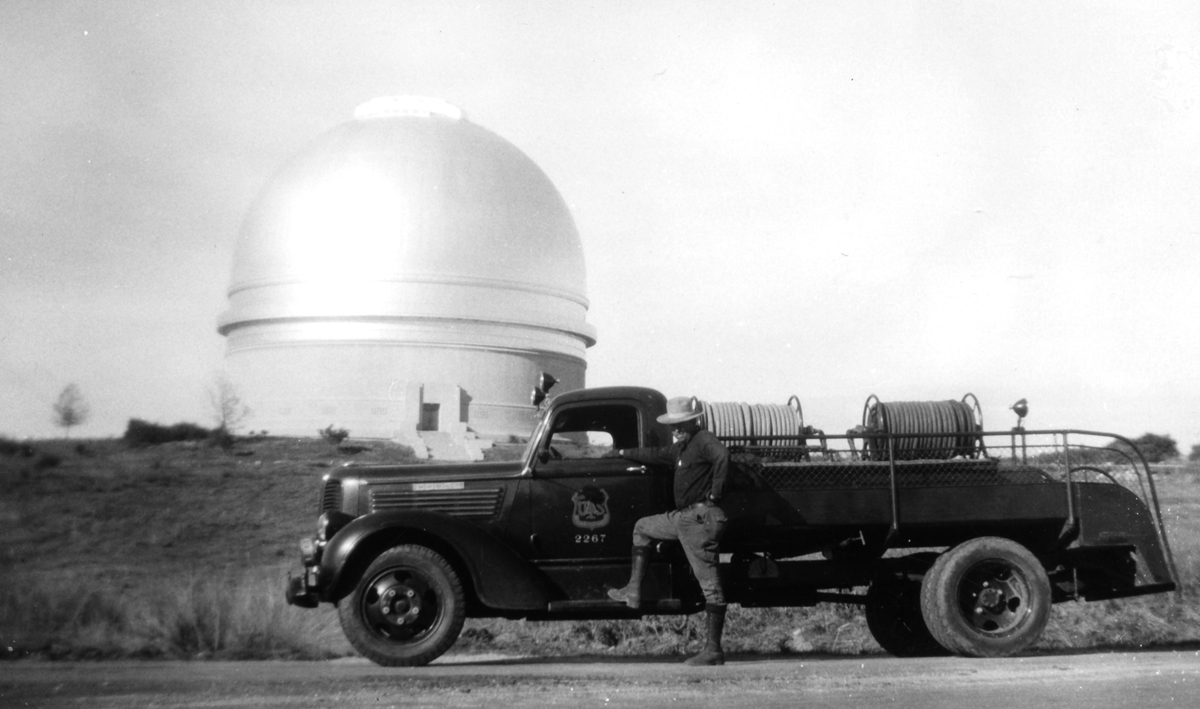
Palomar Observatory is located not in, but right next to the Cleveland National Forest. Ocer the years there has been a long standing relationship between the two organizations.

This week's history photo of the week highlights that relationship with a vintage (likely from the 1940s) photograph of an unknown forest ranger with his vehicle parked in front of the dome of the 200-inch telescope.


If anyone can identify the ranger or knows anything even about his vehicle please leave a comment or send an email.

Sunday, August 22, 2010

Get Your Dark-sky Light Fixtures in San Diego County

It is a fact of life that outdoor lights are need. Visibility, safety and security are necessary.

Unfortunately there is too much light at night as much of it does not help with visibility, safety or security. This wasted light is also wasted energy. Bad lighting often causes glare which can reduce visibility -- the opposite of what a light is supposed to do. Well shielded fixtures eliminate glare and put light where its needed to see well.

The San Diego Chapter of the International Dark-sky Association has combined forces with Lights of America, San Diego Gas & Electric, Dixieline, and Palomar Observatory to offer an affordable and very effective Outdoor Light Fixture to San Diego Residents. How affordable is it? It checks in at less than $10.00 each after rebates! That is a deal.

This fixture is available NOW at any San Diego County Dixieline Stores. Hurry to get yours and take advantage of this great limited time offer.


What does the observatory like about this? When properly installed it is a full-cut off fixture, meaning that there is no up light. While it is not a low-pressure sodium (our favorite!), they aren't well suited for lights around the house. This fixture is of a low color temperature (2700K), which gives a warm glow that limits the amount of blue light making it better for astronomy than a high temperature light.

Saturday, August 21, 2010

60-inch Aluminizing - Wrap Up

Here is a photo from earlier this week as the aluminizing chamber was opened up to reveal the newly re-coated 60-inch mirror.


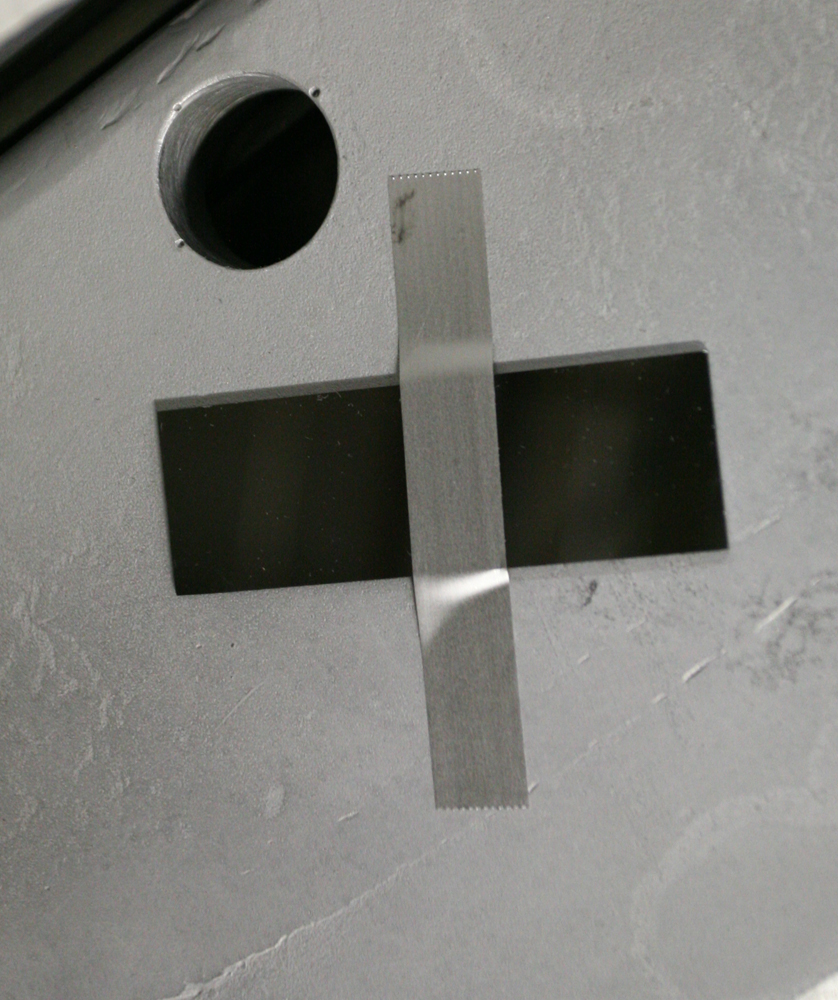
If you look carefully just to the upper left of the mirror you can see that there was something taped to the ring that surrounds the glass. That is one of the four "witness slides" that were placed inside the tank. Since everything on the inside of the chamber gets a coating of aluminum the slides can be used to study the aluminum that was deposited.

Here is a closeup of one of the witness slides where it was aluminized:

And one, with the tape removed:
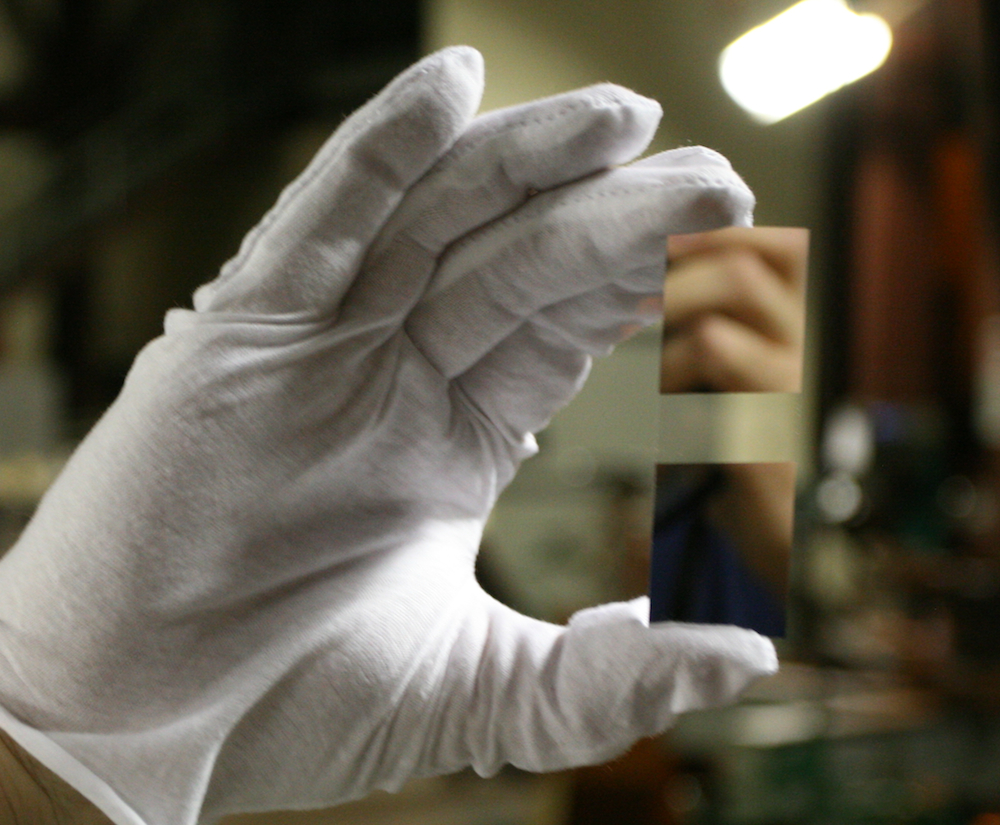

With the sample and the tape removed it is possible to measure the thickness of the aluminum coating, which is useful to know to try and improve the process for future coatings.

The tape that held the witness slides in place was clear. Like the slides, the mirror and everything inside, the tape was also coated with a thin layer of aluminum.


If everything on the inside of the chamber was coated with aluminum, why isn't everything nice and shiny? It is only the materials that are very smooth, like glass, that give a good reflective coating.

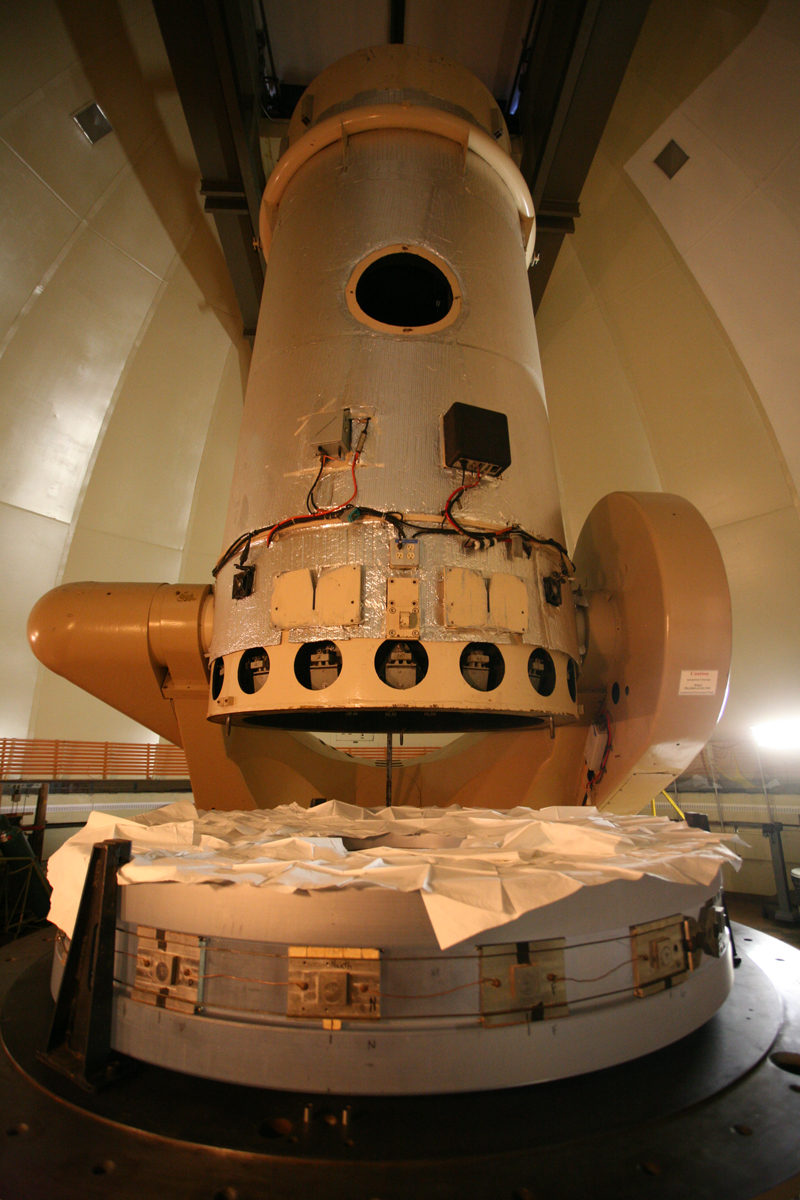
Finally, to close out my coverage of re-coating the 60-inch mirror, here it is as it was being returned to the telescope:
Two Nights at the Palomar Observatory Video

Here is a follow-up to yesterday's astrophoto. A YouTube video of Iair Arcavi's night shots taken during his observing run at Palomar a week and a half ago.


It is simply stunning. Here is a direct link to the video on YouTube.

Friday, August 20, 2010

Astrophoto Friday - Perseids over Palomar

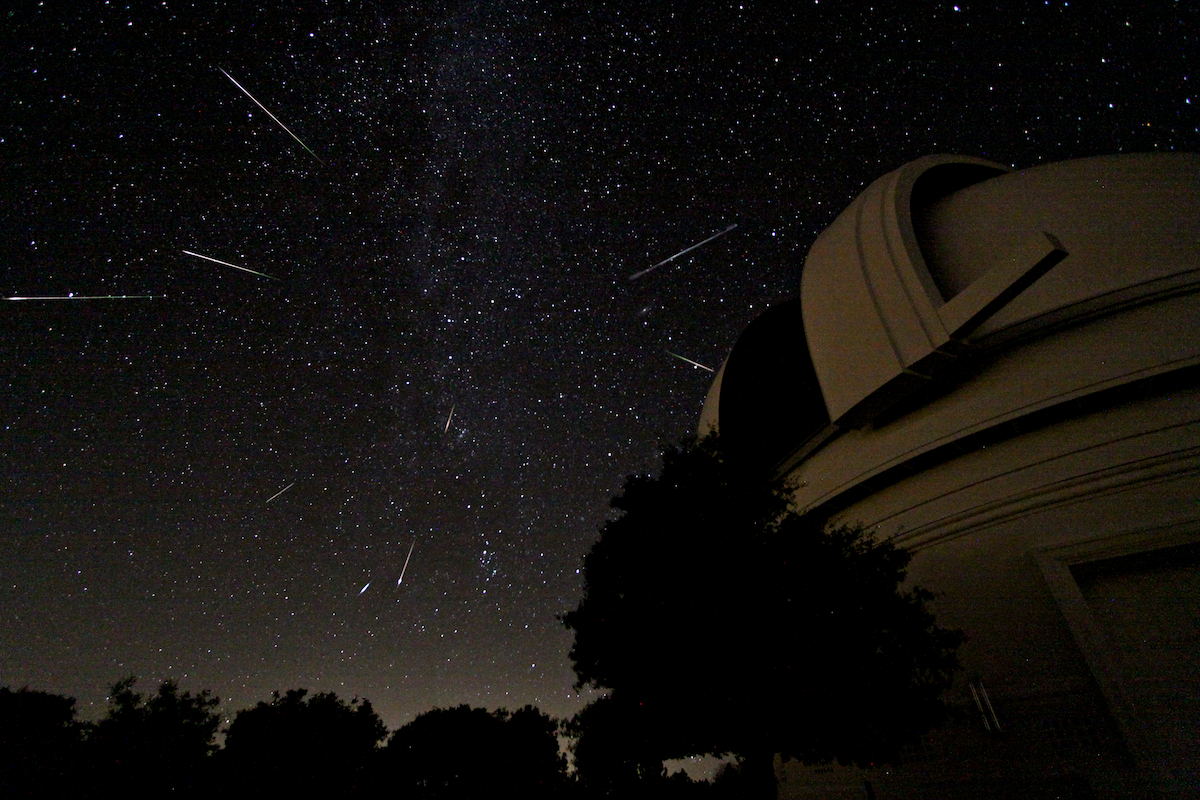
This week's astrophoto comes from Iair Arcavi of the Weizmann Institute of Science in Israel. Iair happened to be observing with the 200-inch Hale Telescope the night of the peak of the Perseid meteor shower. He managed to pull enough time away from his observations of Type Ia supernovae (discovered by the Palomar Transient Factory survey) to take some camera on tripod images of the shower.


I think that you'll agree that he did a super job in capturing the shower. You can easily see that the meteor trails all point back to the radiant (where the meteors seem to stream from) to the left of the open dome.

I had several request from both professional and amateur photographers who wanted to visit the site to capture the shower. Unfortunately I was unable to make it work for them as it isn't easy to gain access to the observatory grounds after hours. Of course it is much easier if you are scheduled to be using the big telescope.

Thursday, August 19, 2010

60-inch Aluminizing - Before and After

Aluminizing the 60-inch mirror has been completed. I have a lot of shots that I could post, but first I wanted to show off the before and after:

I think that most people would agree that the Palomar crew does pretty good work.

Tuesday, August 17, 2010

A Dirty Mirror

Work is progressing on this week's re-aluminumizing of the primary mirror for the Palomar Observatory's 60-inch telescope. Yesterday the mirror was removed from the telescope and today it was transported to the dome of the 200-inch telescope where it will be washed stripped and re-coated. Work on that is taking place as I type.

I have lots of pictures to go through and more to take, but here is a shot of the dirty mirror as it looked just before lunch today.


If you click to enlarge the image you can see various water spots (likely from dripping condensation that dripped off of the dome on to the glass sometime in the last 2 years) on the surface of the glass.

Monday, August 16, 2010

Palomar History Photos of the Week - August 16, 2010

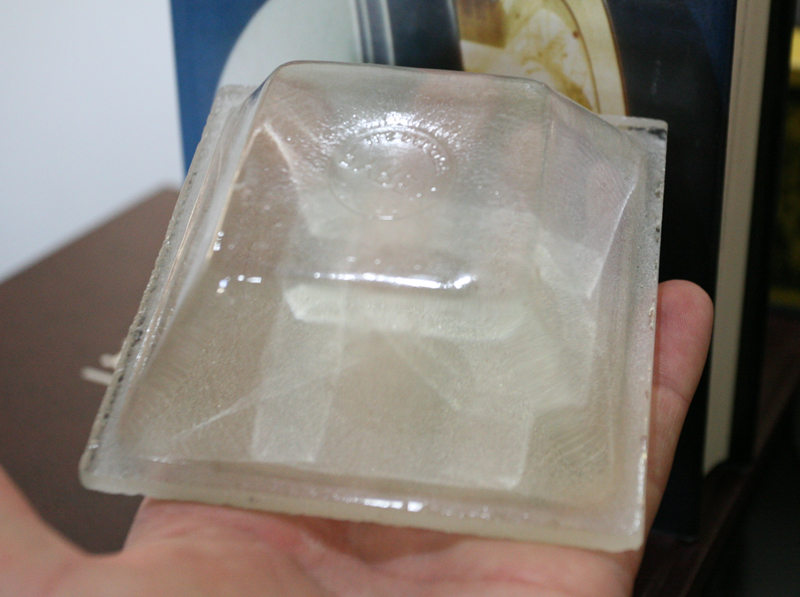
Some of the few remaining relics from the era of grinding and polishing the 200-inch mirror are these glass pyramids:

They were made of Pyrex glass by Corning Glass Works, just like the 200-inch mirror was. In the Optical Shop at Caltech they were fashioned into tools that were used for both grinding and polishing the 200-inch.

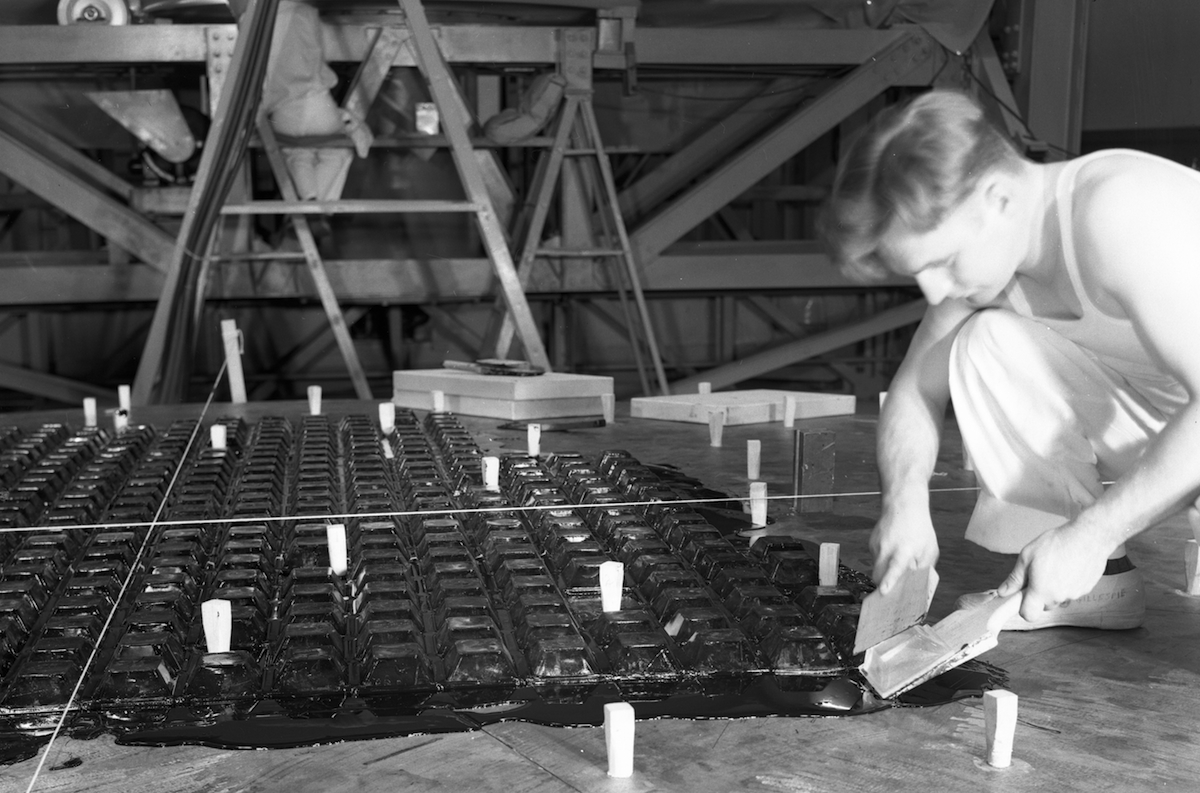
The two pictures below, Taken January 3 1938, show opticians creating the full-sized polishing tool. In the first picture the optician at right is placing one of these glass pyramids into a big metal disc to form a pitch lap.


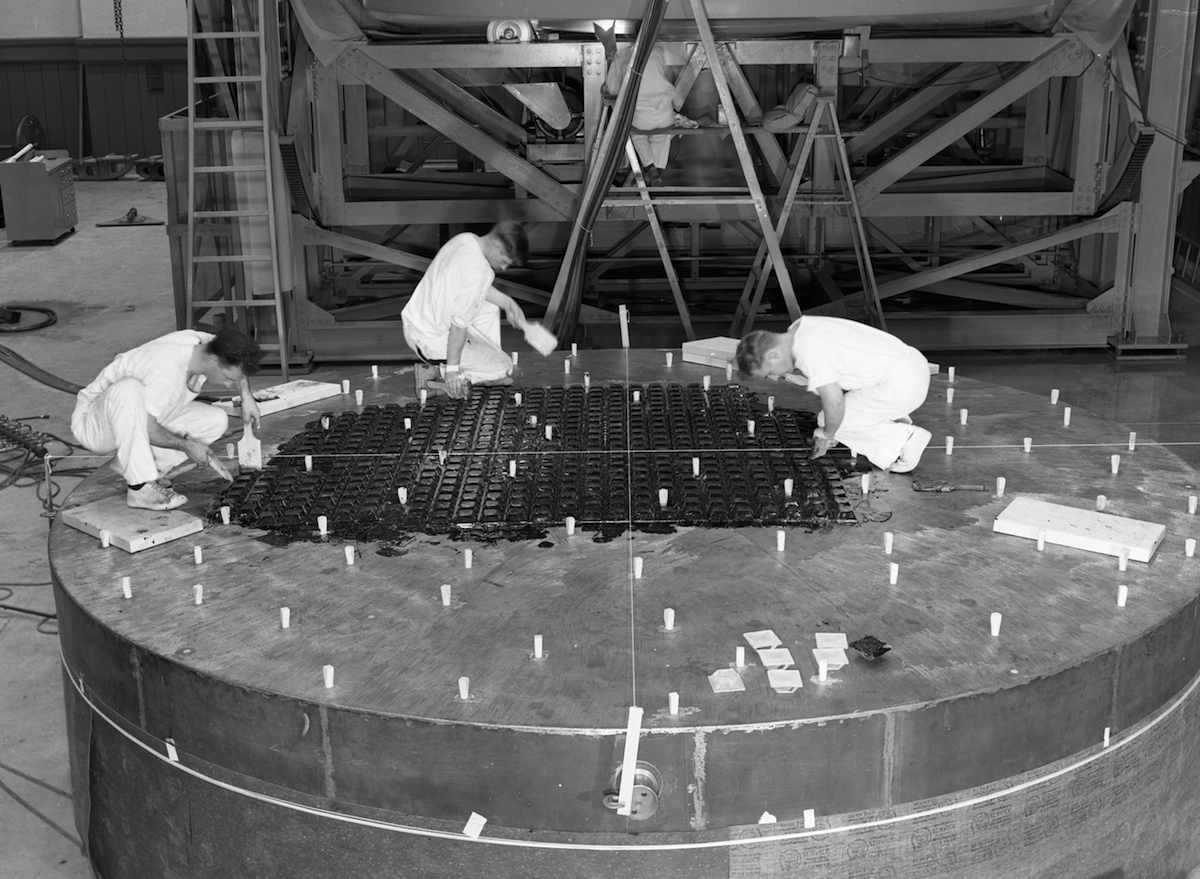
The second view shows the broader view with three men working on the polishing tool. Several of the glass pyramids can be seen on the nearside of the tool.

Saturday, August 14, 2010

I Melt With You

It is time once again to re-coat the primary mirror of Palomar's 60-inch telescope. This was last done in August 2008. For some pics and commentary on when when this was last done see 60-inch Aluminizing Part I, Part II, Part III, and Part IV from this blog.

The mirror does not get pulled from the 60-inch telescope until Monday, but the process of getting ready for the job began quite a while ago. I thought I would show one piece of that process that I have not documented before. One of the key elements in re-coating a telescope mirror is the preparation of the filaments that go into the aluminizing chamber.

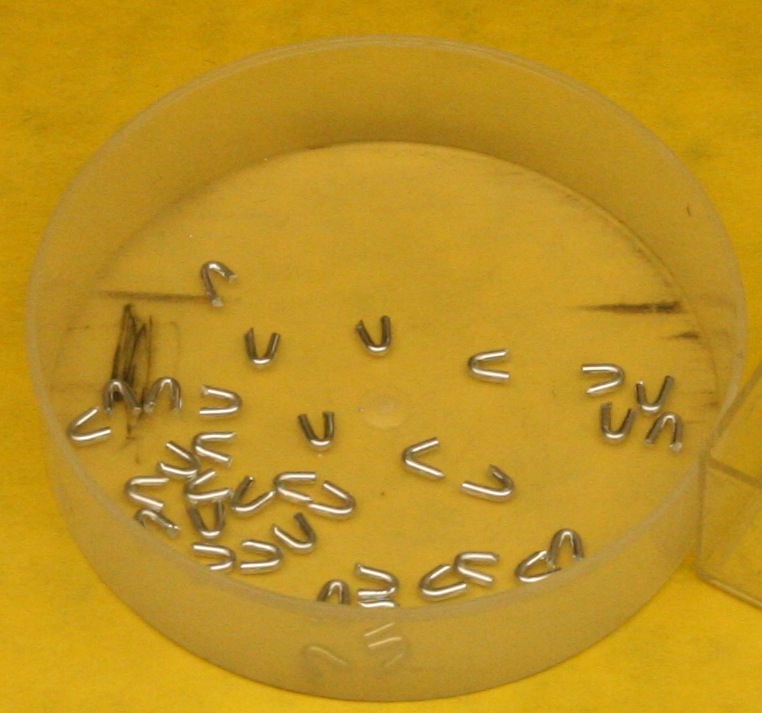
The big task is to melt some of these:

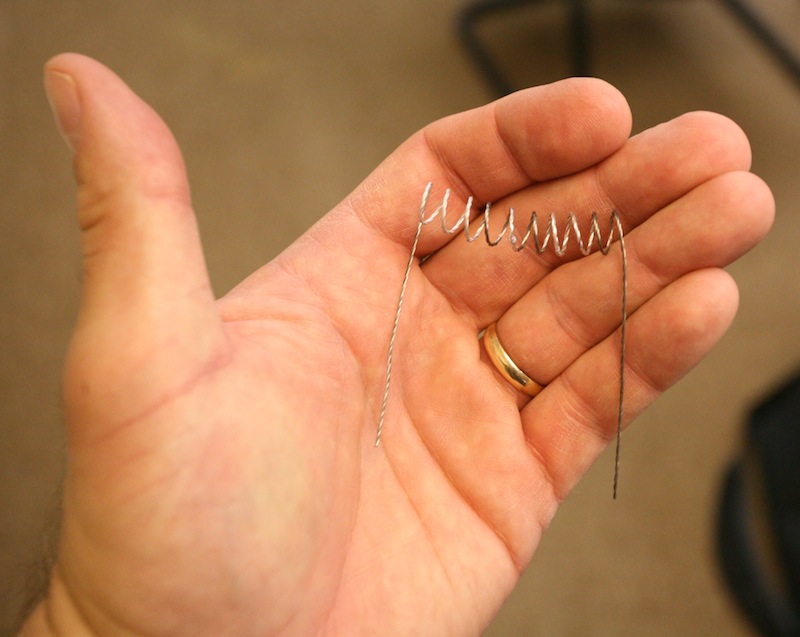
onto thirty two of these:

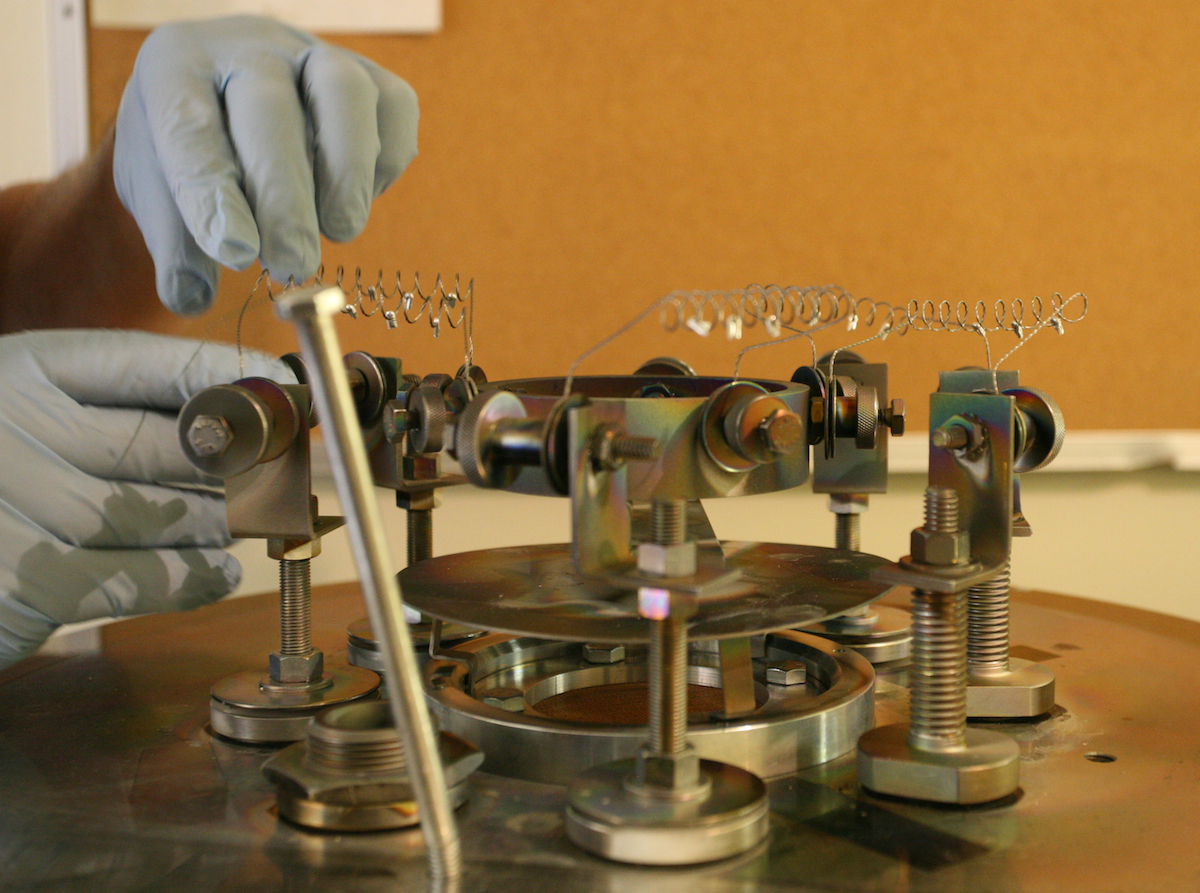
Specifically 0.165 grams of aluminum (about 3 of the pieces shown above) gets melted on each of the 32 tungsten wire coils. Those coils get placed into the aluminumizing chamber where a total of 5.28 grams of aluminum gets vaporized to provide a thin, even coating of the top surface of the mirror.

To get the wire coils prepared the aluminum pieces are draped on the coils which are then attached to this device which holds just 6 coils:


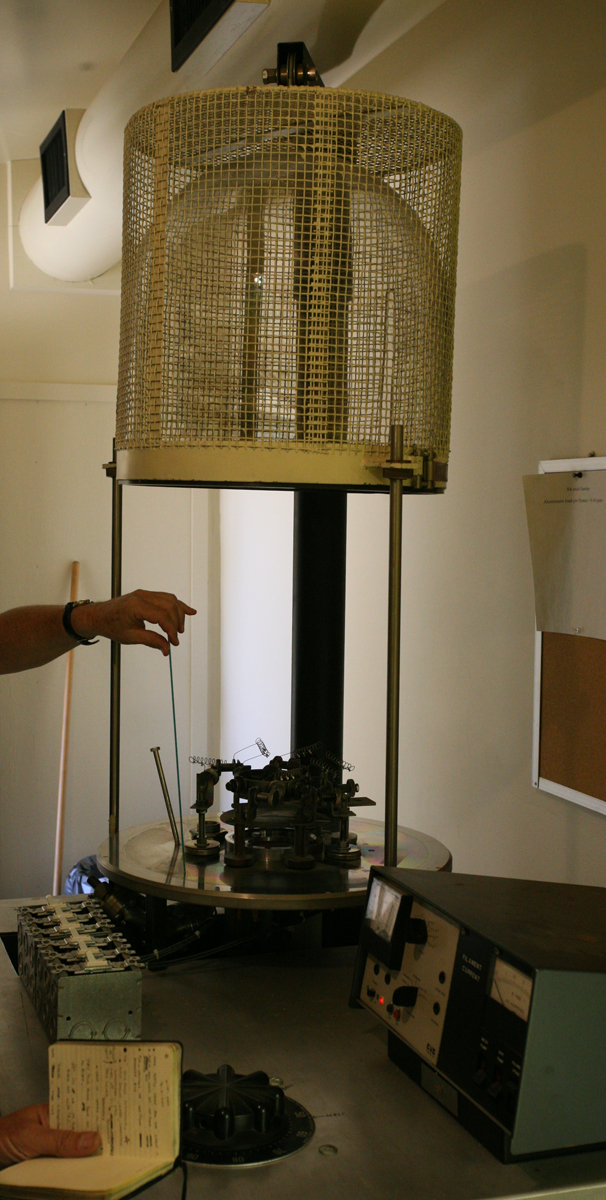
A glass bell jar with a protective wire cage is lowered over the device and the bell jar is pumped down to a vacuum.


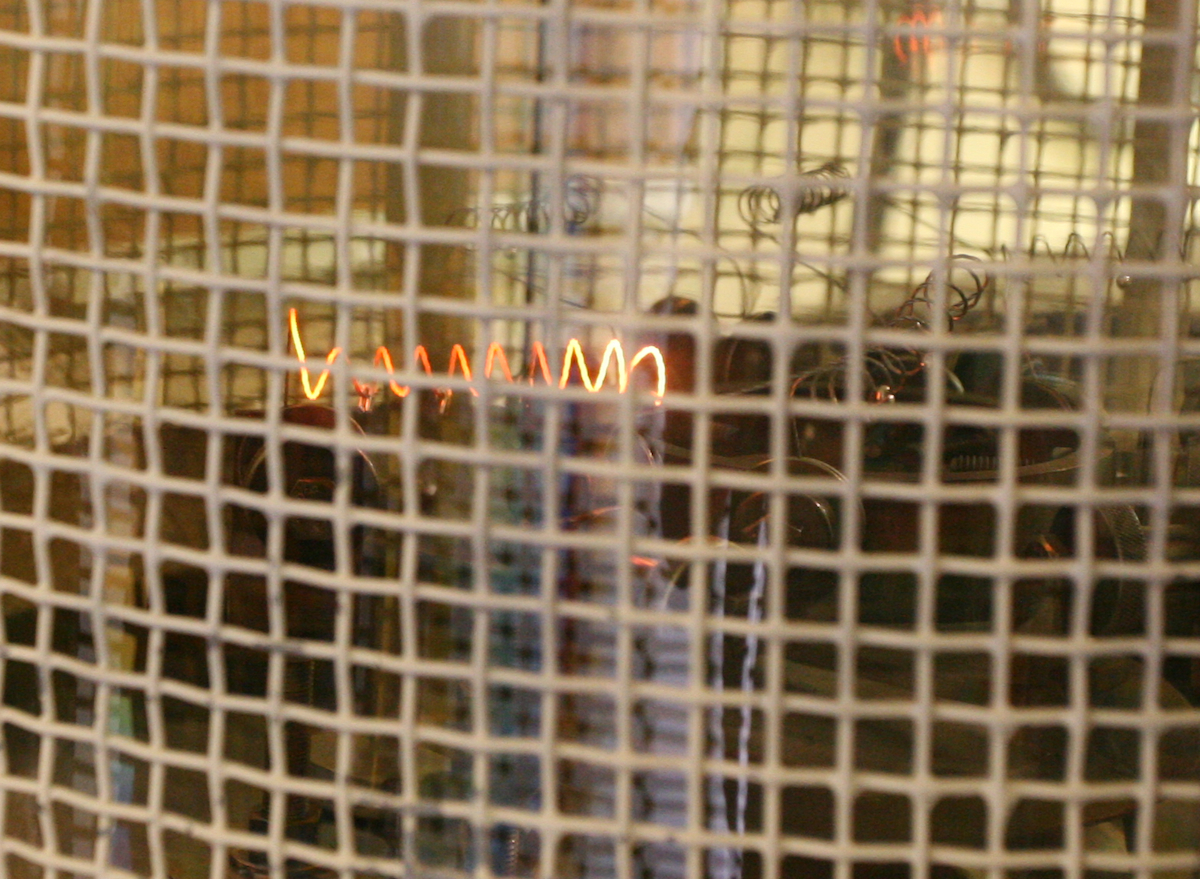
Once a vacuum has been achieved electric current is individually applied to each of the coils in turn.


This is actually done twice. Once to melt the three staple-like pieces of aluminum to the coil. The second application actually causes the melted aluminum to wick out across the wire filament which will later help to provide a more even coating to the glass surface.

The prepared coils are later loaded into the aluminumizing chamber. Next week, once the 60-inch mirror is washed, stripped, and fully clean and dry it will join them as the new coating is applied.