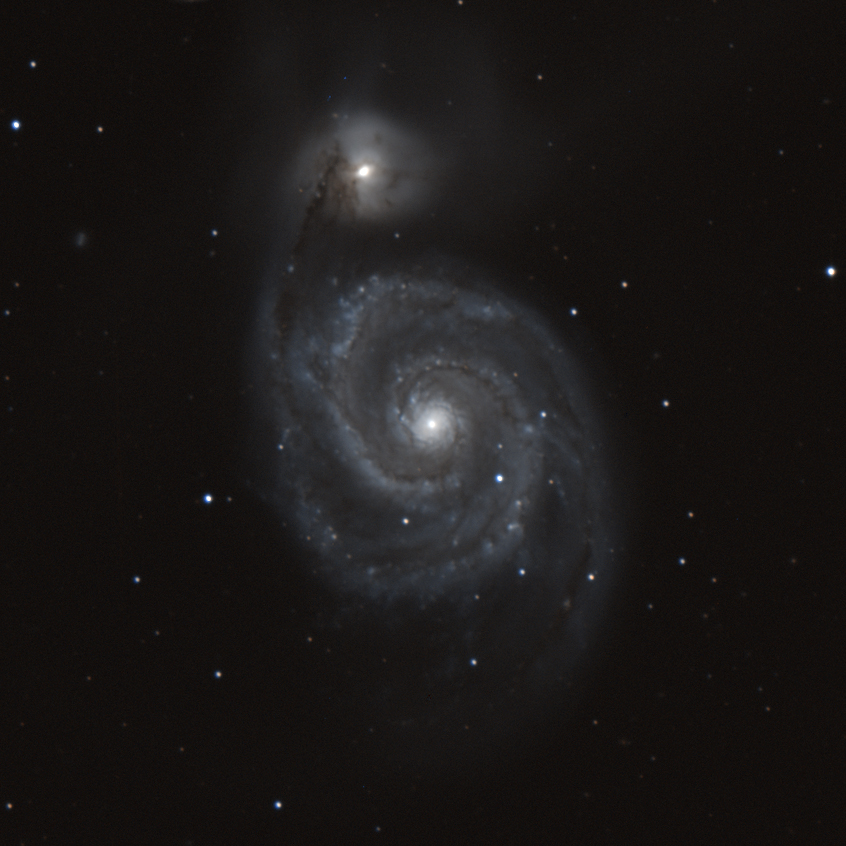
For those keeping score, the PTF survey has discovered 882 supernovae.
The Whirlpool Galaxy can be found in the northern constellation of Canes Venatici (the hunting dogs).
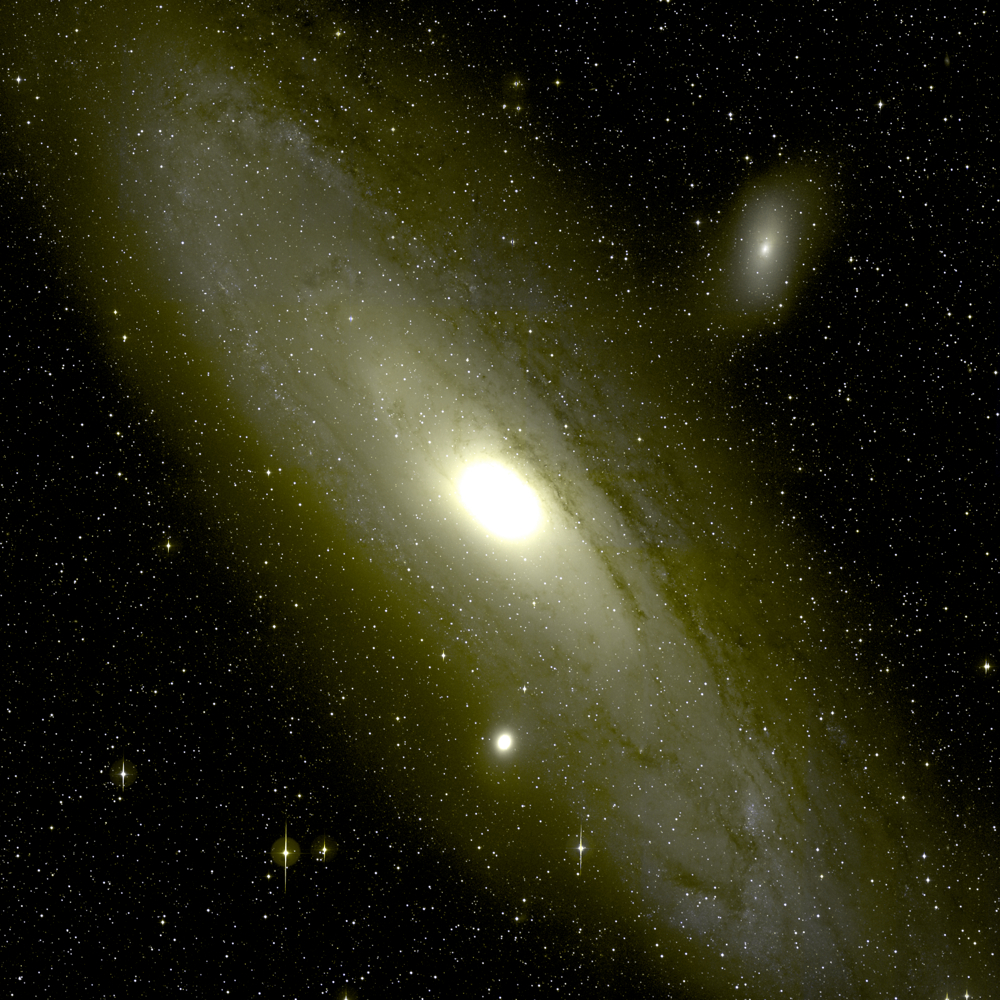
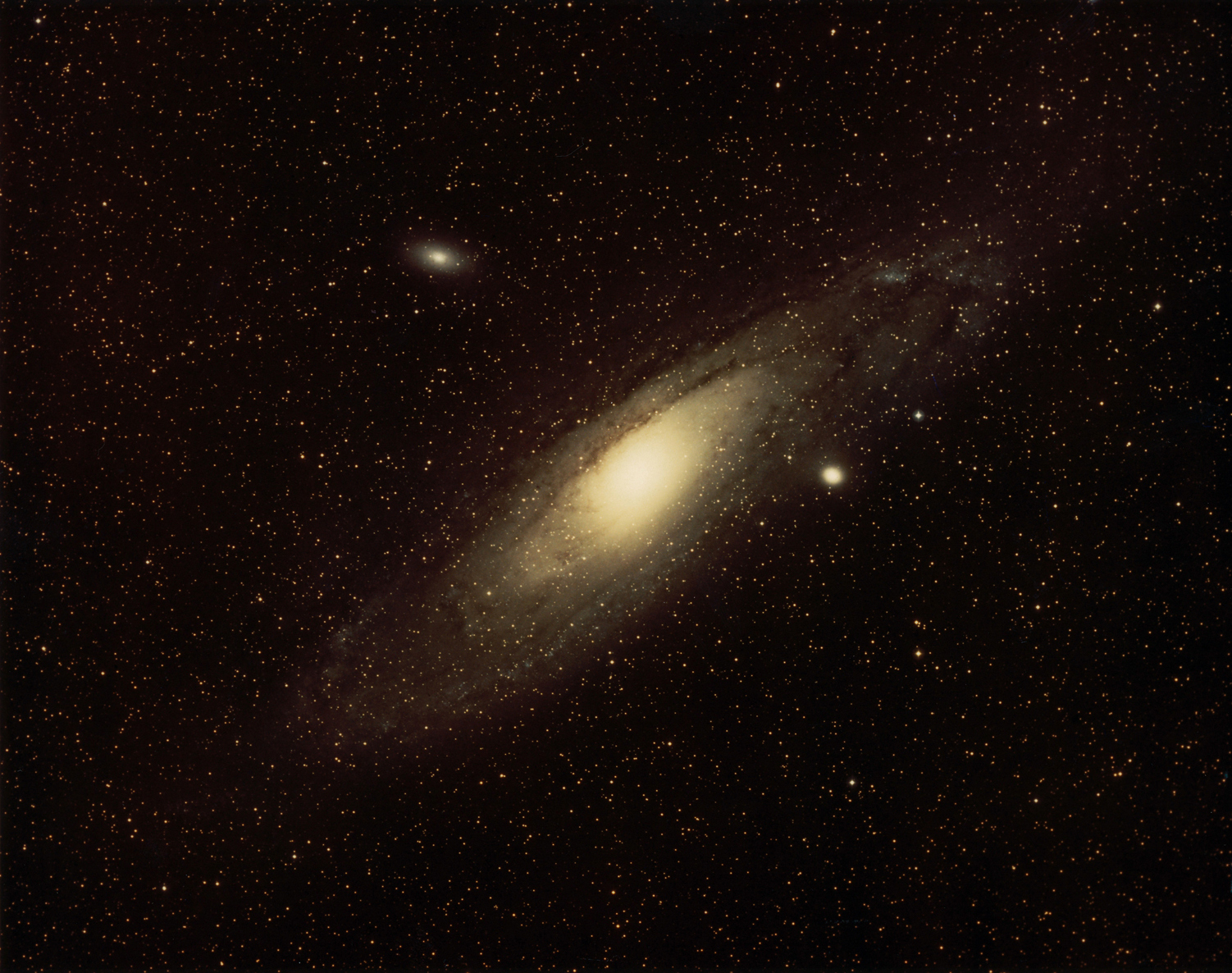 The Andromeda Galaxy (aka M31) as photographed with the 48-inch Schmidt telescope (now called the Samuel Oschin Telescope).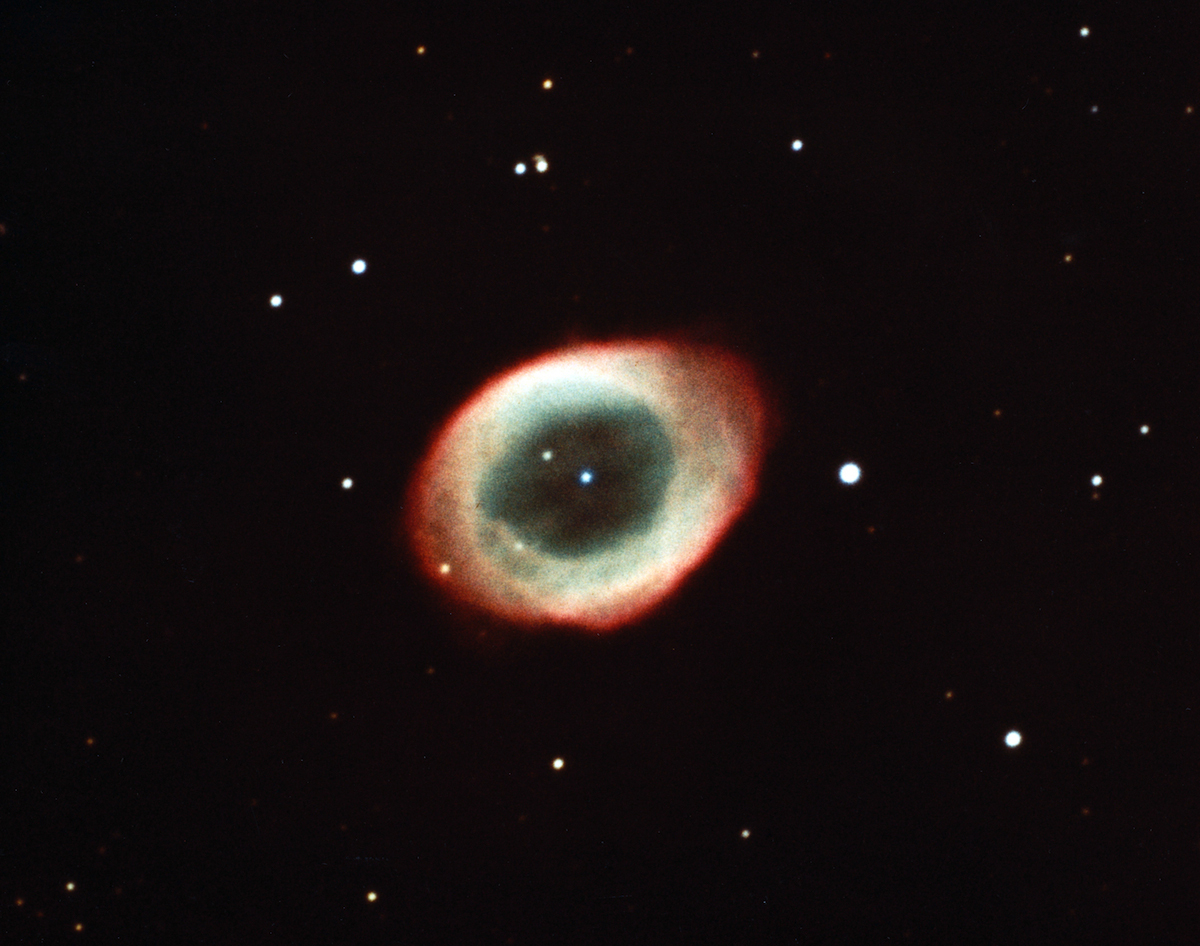
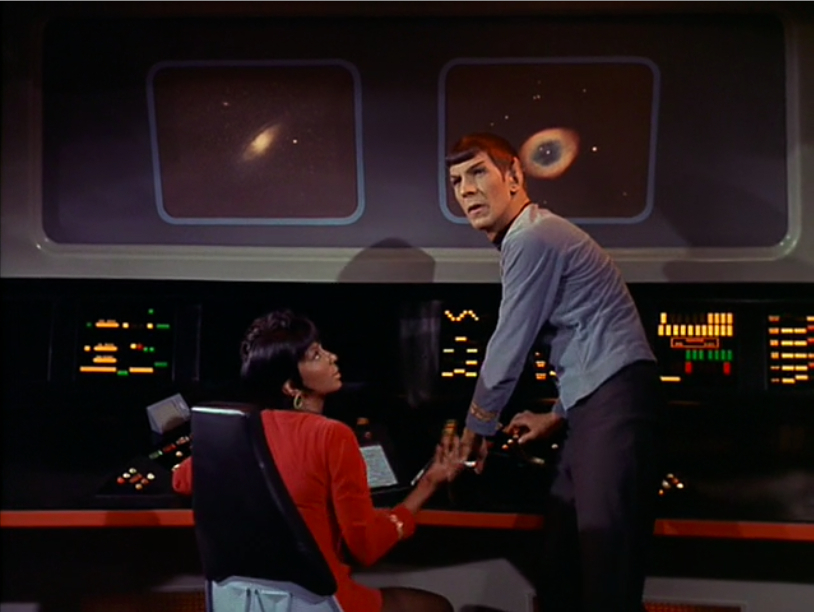 In their day these photos were revolutionary and looked futuristic enough to have them displayed on the bridge of the Enterprise. Times have changed. We have moved on to doing things like imaging exoplanets. The big, familiar objects like the ones shown above can now be easily by amateur astronomers with off of the shelf equipment.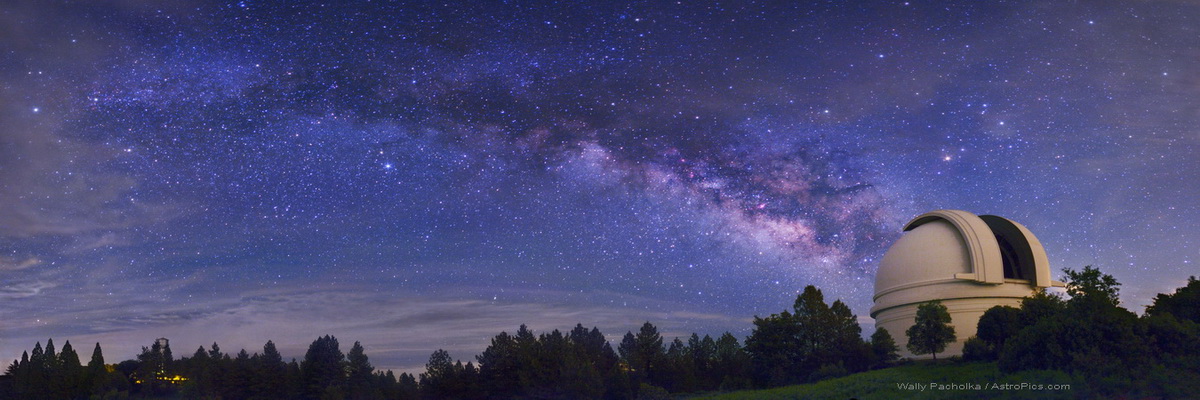

The original Galaxy Zoo was launched in July 2007, with a data set made up of a million galaxies imaged with the robotic telescope of the Sloan Digital Sky Survey (SDSS). With so many galaxies, the team thought that it might take at least two years for visitors to the site to work through them all. Within 24 hours of launch, the site was receiving 70,000 classifications an hour, and more than 50 million classifications were received by the project during its first year, from almost 150,000 people.
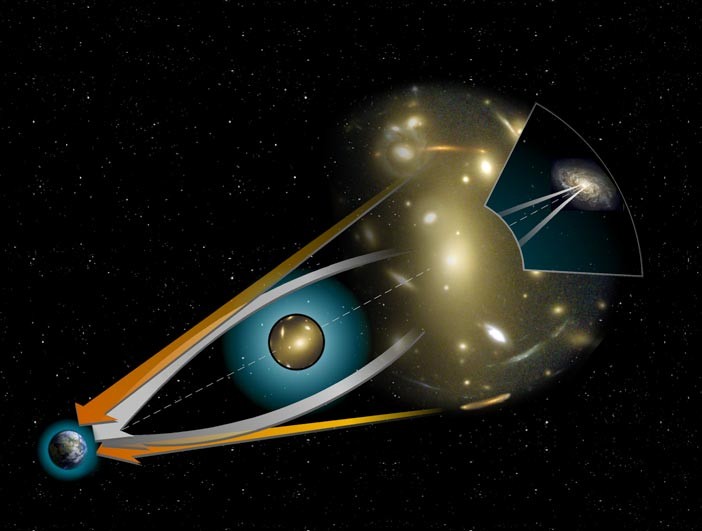
Through visual inspection of ~900,000 galaxies in the SDSS, Galaxy Zoo participants are discovering potential lens candidates at a prodigious rate. Our sample includes blue arcs and multiply imaged sources around early-type galaxies. The data will provide key constraints on the dynamics and mass distribution of both luminous and dark matter in a large sample of intermediate redshift elliptical galaxies.The Zoo project also running The Hunt For Supernovae which is helping to discover supernovae and transients first photographed with Palomar's Samuel Oschin Telescope via the Palomar Transient Factory project. Head on over to check it out.
Congratulations Dr. Bundy! He is currently continuing his research at UC Berkeley.
In his Caltech thesis, Dr. Bundy used observations with the Wide Field Infrared Camera (WIRC) at Palomar Observatory to quantify the galactic process called "downsizing," in which the sites of active star formation shift from high-mass galaxies early in the history of the universe to lower mass galaxies as time goes on. His study indicated that there is a galaxy mass limit beyond which some mechanism inhibits star formation so that massive galaxies become quiescent. Bundy's analysis of the evolution of the star formation rates and of galaxy morphology has been widely cited and is considered an important constraint on theories of early galaxy formation.

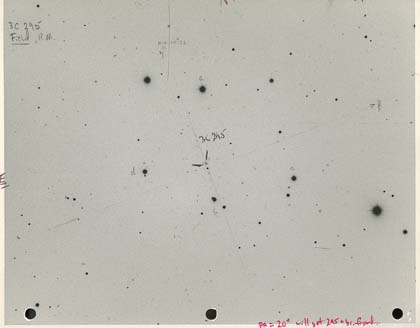 Rudolph Minkowski, after a long and distinguished career in astronomy, had his last night of observing on Palomar's 200-inch Hale Telescope on March 29, 1960. It proved to be a good night as he measured the distance to the central galaxy in a cluster of galaxies known as 3C295.
  NGC 4157 is shown above with Zwicky's 1937 supernova arrowed.
Before anyone knew what a galaxy was it had been the convention call them "nebulae". Today the word "nebula" refers to a cloud of gas in space. At the time of his writing Zwicky knew that the "nebulae" he was referring to are all what we call galaxies. Edwin Hubble's discoveries about galaxies was less than a decade earlier and the term was a holdover from that previous age.
From September 5, 1936, until the end of May, 1937, about 300 photographs were obtained covering as often as possible the Virgo cluster of nebulae as well as its northern and southern extensions into Coma Berenices, Canes Venatici, Ursa Major, Hydra, and Centaurus, respectively. In addition, some of the nearby nebulae, such as the great nebula in Andromeda, Messier 33, 51, 80, 81, 101, NGC 55, 247, 253, 2403, 2366, 4236, IC 342, 1613, etc., were frequently photographed. It is estimated that, in the period mentioned, between 5000 and 10,000 nebular images were carefully searched for new stars.

 Posts
All Comments
Posts
All Comments


